

-320x320.jpg "MIG/MAG Welding Machines")
-320x320.jpg "TIG AC/DC Welding Machines")




-320x320.jpg "Electrodes for High-Alloy Steel")
-320x320.jpg "Surfacing Electrodes")
-320x320.jpg "Electrodes for Cast Iron")












-320x320.jpg "Welding Masks")




-320x320.jpg "Welding Machine Carts")
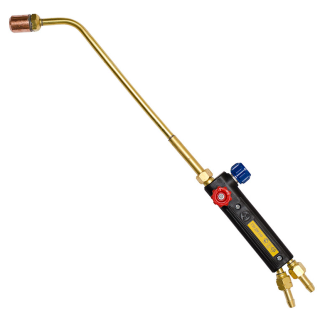









TIG torch construction
Published:
20/07/2026
Understanding TIG torch design is important before choosing a machine, consumables, and an operating mode. A TIG torch supplies current, holds the tungsten electrode, and directs shielding gas into the welding zone. The design affects welding arc stability, weld cleanliness, and the welder’s comfort.
What a TIG torch is and how it works
A TIG torch is used for argon arc welding with a non-consumable electrode. The tungsten electrode creates the welding arc, while argon protects the weld pool from air. Filler metal is supplied separately if needed.
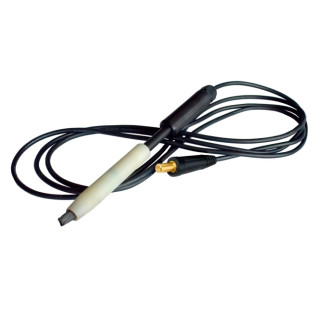
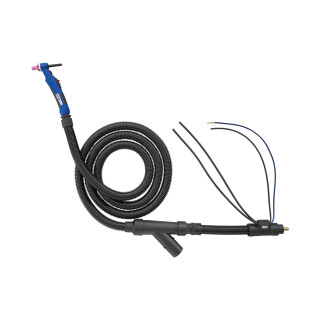
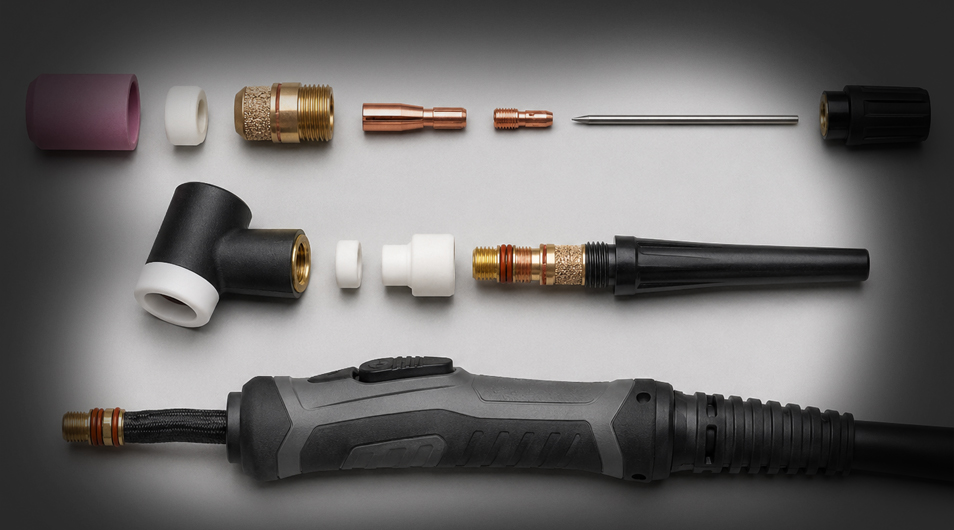
In simple terms, the TIG torch design includes a handle with a hose package and a working part where the electrode, collet, collet body, insulator, nozzle, and back cap are fixed. Current passes through the torch, while shielding gas exits through the ceramic nozzle and covers the melting zone.
Main structural elements of a TIG torch
TIG torch design consists of parts that work as a single system. Some elements hold the electrode, while others are responsible for gas supply, cooling, and control. The more accurately the components are selected, the easier it is to control the arc and weld shape.
The main structural elements include:
- the handle holds the torch and helps guide the weld;
- the hose package connects the torch to the machine and supplies current, gas, or coolant;
- the collet fixes the tungsten electrode;
- the collet body holds the collet and directs the gas flow;
- the gas lens distributes argon around the electrode;
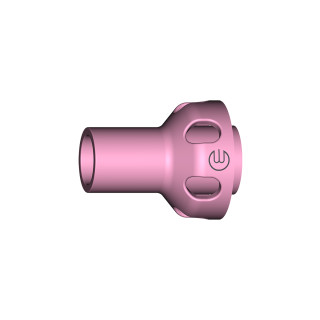
- the ceramic nozzle forms the shielding flow;
- the insulator separates current-carrying and external parts;
- the back cap closes the electrode from the rear side.
If an element is worn or installed incorrectly, gas shielding deteriorates, the arc becomes unstable, and consumables fail faster.
TIG torch consumables and their purpose
TIG torch consumables are selected according to current, electrode diameter, material, and welding position. The tungsten electrode affects arc ignition. The collet must clamp the electrode securely, while the nozzle must direct argon without turbulence.
A gas lens is needed for an even gas flow, especially when welding stainless steel, thin metal, and areas where clean pool protection is important. The back cap is selected according to electrode length: a short one is convenient in hard-to-reach places, while a long one is suitable for standard work.
To understand how to assemble a TIG torch, the installation order must be followed. First, the collet and collet body are placed into the torch body, then the electrode, nozzle, insulator, and back cap are installed. After assembly, the electrode stick-out, connection tightness, and gas flow are checked.
Air and liquid cooling of TIG torches
Cooling is selected according to current strength and work duration. Air-cooled torches are simpler, lighter, and more convenient for repair work, short tasks, and welding at moderate currents. They do not require a separate cooling unit.
For high loads, liquid cooling is used. Coolant circulates through the hose package and reduces overheating of the handle and working part. This is important during long TIG welding at high currents.
Modern TIG welding requires a stable arc, quality gas shielding, and a properly selected torch.
How TIG torch design affects welding convenience
The shape of the handle, the flexibility of the hose package, the back cap length, and the nozzle type affect comfort. A lightweight torch reduces hand fatigue, while a flexible package helps work in difficult positions. For precise welds, visibility of the welding zone and a stable electrode position are important.
Compatibility with the machine also affects convenience. The connector, gas supply, control button, and cooling must match the equipment. Therefore, before buying, it is worth evaluating not only the torch but also all welding equipment with which it will be used.
Summary
A TIG torch consists of a handle, hose package, electrode, collet, nozzle, back cap, insulator, and other elements that affect weld quality. If you understand TIG torch design and know how to assemble a TIG torch correctly, it is easier to choose consumables, maintain a stable arc, and achieve a clean joint.