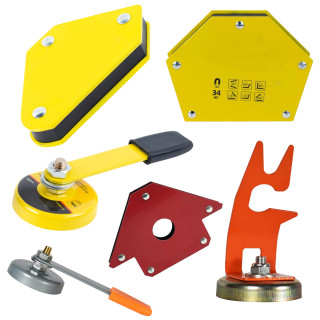
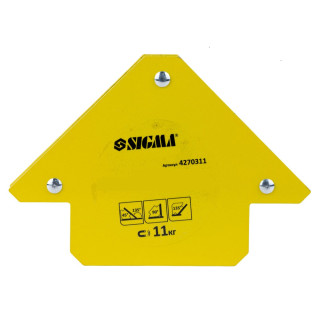
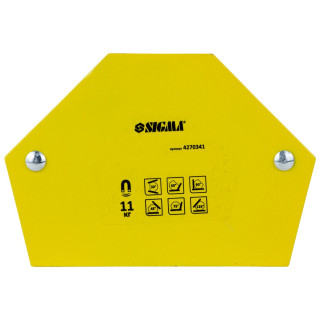
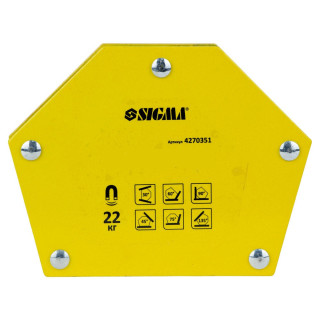
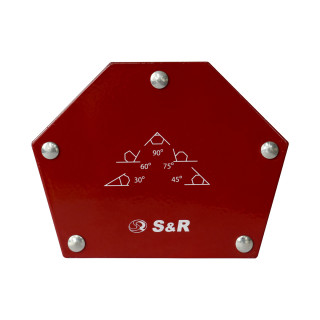
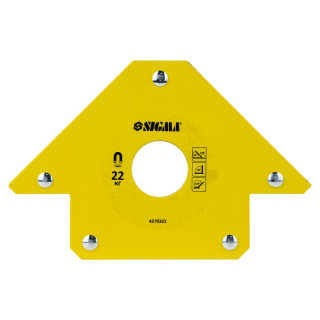
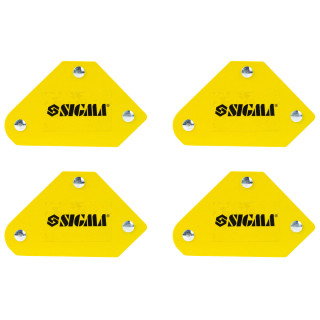
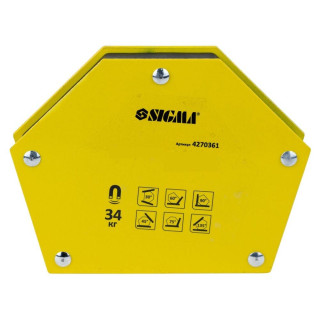
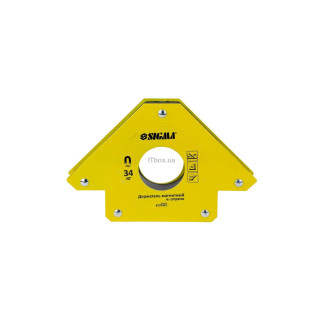
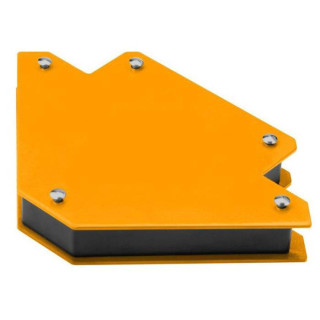
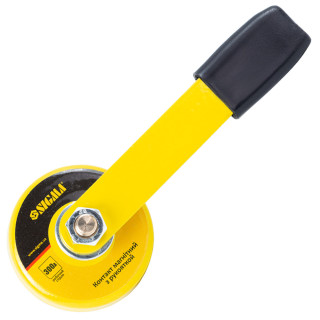
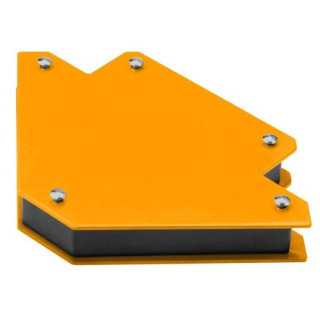
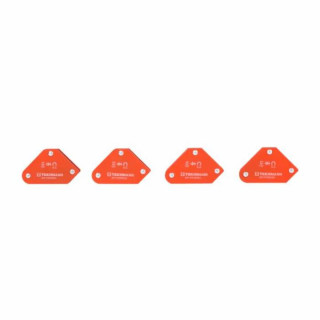
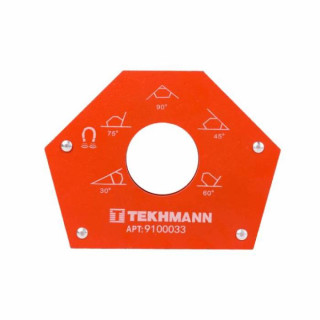
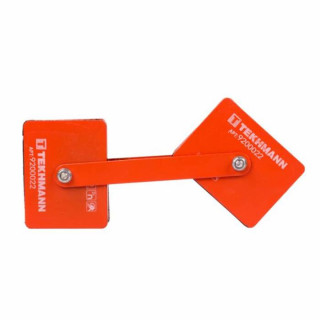
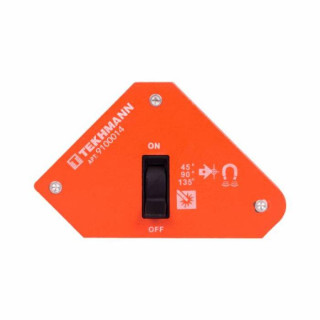
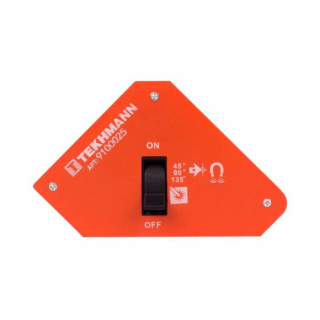
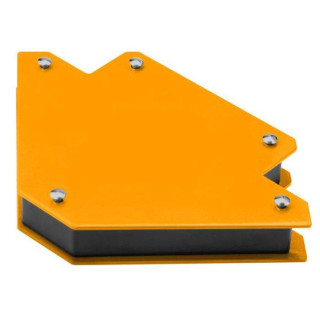
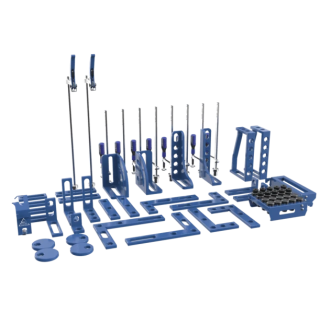
Welding magnets are used where precise fixation, the correct angle, and convenience during assembly before welding are important. This accessory helps hold the metal in the required position, speeds up installation, and simplifies preparation.
Welding magnets for precise fixation of parts at an angle
Welding magnets help position the workpiece quickly and keep the angle without shifting. They are used when working with profiles, pipes, sheets, and other parts where support is needed before tack welding.
Purpose of welding magnets
Welding magnets are needed for preliminary fixation of parts when it is important to maintain accuracy and prevent misalignment. Welding magnets are useful where several elements need to be prepared quickly for joining.
Fixation of metal parts before welding
Before welding begins, the workpieces must be securely fixed and held in the correct position. A magnetic holder reduces the load on the welder and helps keep the joint surface even.
Setting the angle and simplifying the welding process
The correct angle affects the quality of the structure and further installation. Welding magnets help perform alignment faster, reduce manual operations, and simplify work with metal.
Advantages of magnets for welding work
The advantage of such solutions is that they speed up preparation and make fixation more convenient. With their help, it is easier to hold parts at the required angle and control the position of the workpieces.
Fast fixation and ease of work
Welding magnets make it possible to move to assembly almost immediately without complicated setup. This makes the tool practical for a workshop, installation work, and small-scale production.
Precise holding of parts at a set angle
When choosing, it is worth paying attention to important parameters:
- holding force and permissible load;
- number of angles and fixation accuracy;
- body quality and working surface;
- convenience of installation and removal.
This approach helps select the tool for a specific workpiece and assembly format.
Types of welding magnets
Welding magnets are available in different versions, so they can be selected for standard and more complex tasks. Some models are designed for standard joints, while others are suitable for non-standard structures.
Standard-shaped angle magnet
Standard models are used for simple jobs where a fixed angle and fast fixation of parts are needed. They are suitable for assembling frames, box sections, and steel units.
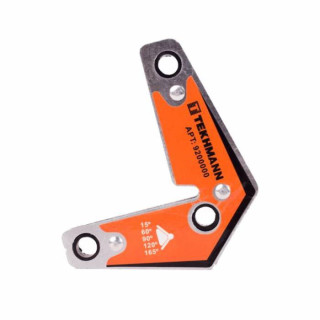
Magnets for non-standard structures
For complex structures, models with a different shape and extended holding capabilities are used. They help work with parts of different sizes and are convenient where a standard solution is not enough.
How to choose a welding magnet
Before buying, it is important to consider the shape, load, size of the workpieces, and type of work. If you need to buy welding magnets for use, it is better to assess convenience and build quality right away.
Number of angles and degree of fixation
The more accurately the magnet matches the working angles, the easier it is to assemble without misalignment. For some tasks, basic positions are enough, while for others additional fixation options are needed.
Design and holding force of parts
A reliable design affects service life, safety, and operating stability. For complete workplace equipment, you can also choose welding machines.
Where to buy welding magnets
In the PATON online store, you can buy welding magnets for workshops, installation work, and production tasks. Here it is convenient to choose an accessory by design, holding force, and purpose.
Welding magnets help speed up assembly, improve accuracy, and make working with metal more convenient. A properly chosen holder simplifies part preparation and improves joint quality.


-320x320.jpg "MIG/MAG Welding Machines")
-320x320.jpg "TIG AC/DC Welding Machines")




-320x320.jpg "Electrodes for High-Alloy Steel")
-320x320.jpg "Surfacing Electrodes")
-320x320.jpg "Electrodes for Cast Iron")









-320x320.jpg "Welding Masks")




-320x320.jpg "Welding Machine Carts")