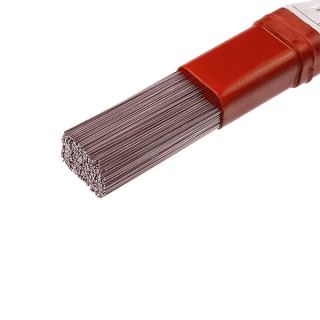
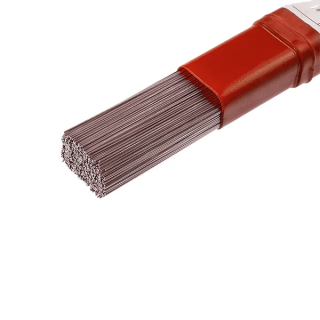
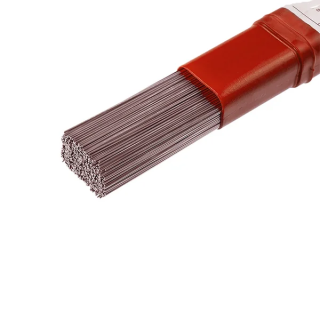
Filler rods are used where precise weld pool control, clean weld formation, and compatibility with the base metal are important. The right filler choice affects joint quality, process stability, and the properties of the finished weld.
What are filler rods
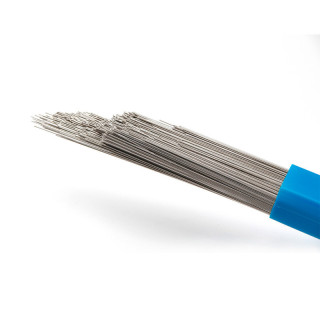
Filler rods are used to form a weld where it is important to precisely control the addition of metal to the heating zone. Such a rod is selected for a specific alloy, material grade, and type of work in order to preserve joint strength, the structure of the metal, and a neat surface after welding.
Filler rods help achieve a stable result when working with different materials. The choice depends on diameter, compatibility with the base metal, process temperature, filler rigidity, and resistance to operating conditions. The chemical composition of the metal, corrosion resistance, further weld processing, and the quality of the surface after cooling are also taken into account.
Types of filler rods
Filler rods differ in composition, purpose, and field of application. For different tasks, the material is selected according to the base metal, heating mode, and the requirements for the future joint. Important factors include the alloy, strength, type of filler, and the behavior of the material during melting.
It is also important to assess how the rod behaves in operation, how evenly the filler is fed, and how the weld is formed. For some processes, flux, protective coating, and resistance to temperature loads are important. The more accurately the material is selected, the more reliable the result and the easier it is to control the quality of welding and surfacing.
By composition, there are solutions for carbon, stainless, and non ferrous alloys. Each option has its own melting temperature, weld characteristics, and compatibility requirements. That is why filler rods are chosen not by one parameter, but by the combination of material properties and operating mode.
How to choose filler rods for welding
When choosing, it is important to consider several parameters:
- rod diameter according to the thickness of the part;
- compatibility of the filler and the base metal;
- application conditions and operating temperature;
- requirements for the weld, surfacing, and further processing.
If filler rods for welding are selected correctly, the joint retains its strength and the surface remains neat. This is especially important where precise welding is required without unnecessary defects and with a predictable result.
Where filler rods are used
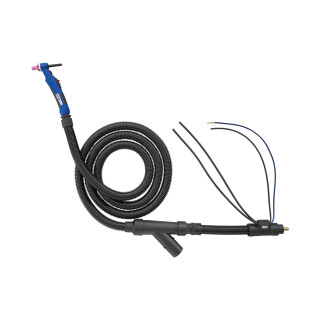
Filler rods are in demand in repair work, the production of structures, work with stainless and non ferrous metals, and in tasks where precision and a clean weld are important. They are especially often used where TIG welding is applied and high quality TIG welding torches are required.
They are used in product assembly, part repair, and the creation of neat joints where it is important to control filler addition and the behavior of the metal during heating. For critical tasks, the accuracy of material selection and its compatibility with the base material are of great importance.
Properly selected filler rods simplify the work, help preserve the properties of the metal, and improve joint quality. The right choice of filler affects both the convenience of the process and the reliability of the finished weld.


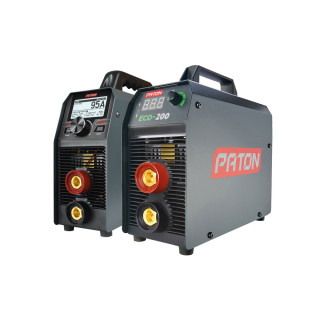
-320x320.jpg "MIG/MAG Welding Machines")
-320x320.jpg "TIG AC/DC Welding Machines")




-320x320.jpg "Electrodes for High-Alloy Steel")
-320x320.jpg "Surfacing Electrodes")
-320x320.jpg "Electrodes for Cast Iron")







-320x320.jpg "Welding Masks")




-320x320.jpg "Welding Machine Carts")






 Low stock