

-320x320.jpg "MIG/MAG Welding Machines")
-320x320.jpg "TIG AC/DC Welding Machines")




-320x320.jpg "Electrodes for High-Alloy Steel")
-320x320.jpg "Surfacing Electrodes")
-320x320.jpg "Electrodes for Cast Iron")








-320x320.jpg "Welding Masks")




-320x320.jpg "Welding Machine Carts")






How to choose a MIG welding nozzle?
Published:
19/08/2026
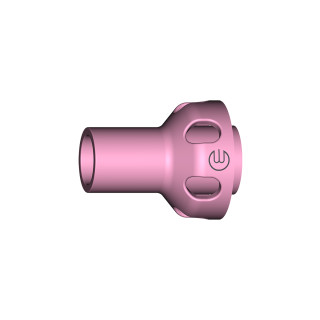
The nozzle affects the distribution of shielding gas around the weld pool, visibility of the working area, and the amount of spatter on the torch. Therefore, knowing how to choose a nozzle for a MIG/MAG welder is important for stable welding. The part should be selected according to its diameter, length, shape, and operating conditions.
High-quality consumables for MIG/MAG torches should be compatible with the torch model. An unsuitable nozzle may reduce shielding gas effectiveness and limit visibility of the welding area.
What is a gas nozzle used for in MIG/MAG welding
The gas nozzle directs shielding gas toward the weld pool and protects the molten metal from contact with the surrounding air. If the gas flow is distributed incorrectly, porosity and oxidation may appear in the weld.
The nozzle also protects the contact tip and internal torch components from spatter. Its shape affects access to the weld, which is especially important when welding corners and pipes.
Which gas nozzle parameters affect welding
Choosing a nozzle for a MIG/MAG welder starts with checking compatibility with the torch. Then its shape, internal diameter, length, and material should be considered. These parameters affect gas flow, access to the workpiece, and the consumable's resistance to heat.
Nozzle shape
Nozzles can be cylindrical, conical, or tapered. A cylindrical shape provides a wide gas flow and is suitable for standard welding tasks. A conical nozzle provides better access to narrow areas.
Tapered models are convenient for hard-to-reach locations but require the correct shielding gas flow rate. The shape should be selected according to the geometry of the joint.
Nozzle diameter
The diameter affects the width of the gas flow. A larger opening helps protect a wider weld pool and is suitable for higher welding currents. A smaller diameter is convenient when working with thin metal and narrow joints.
A nozzle that is too wide can make access to the weld more difficult, while one that is too narrow may limit shielding gas coverage. Wire diameter, welding current, and the distance to the workpiece should also be considered.
Nozzle length
The nozzle length determines the position of the contact tip relative to the nozzle edge. A shorter model improves visibility and access to the joint, while a longer nozzle provides better protection for the internal torch components.
When choosing the length, the required wire stick-out and the characteristics of the weld should be considered. An unsuitable length can make it more difficult to maintain a consistent distance from the weld pool.
Manufacturing material
The nozzle operates at high temperatures and is constantly exposed to spatter. Therefore, its material must withstand heat and maintain its shape. Metal alloys with good thermal conductivity and wear resistance are commonly used.
Regular cleaning extends the service life of the nozzle. Heavy contamination inside it can disturb the flow of shielding gas.
How to choose a nozzle for different welding tasks
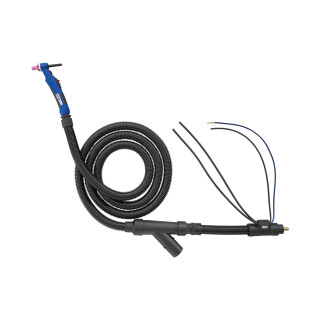
For standard MIG/MAG welding of steel, a cylindrical or conical nozzle compatible with the specific torch is usually suitable. Appropriate MIG/MAG welding torches are selected according to welding current, wire type, and operating conditions, while the nozzle must be compatible with the design of the torch being used.
For thin metal, good visibility and precise gas delivery are important, so a smaller-diameter nozzle can be more convenient. At higher welding currents and with a wider weld pool, a larger diameter is usually preferable.
When welding aluminum and stainless steel, a stable shielding gas environment is particularly important. The nozzle should distribute the gas evenly and remain free from contamination that could disturb the flow.
When should the nozzle be replaced
The nozzle gradually wears due to heat and welding spatter. It should be replaced if the edge becomes deformed, the internal surface is damaged, or contamination can no longer be removed properly.
Signs of a problem may include reduced shielding gas effectiveness, an unstable weld, and rapid spatter buildup. Before replacing the nozzle, the contact tip should also be inspected because the condition of both components affects torch performance.
Summary
How to choose a nozzle for a MIG/MAG welder depends on its shape, diameter, length, material, and welding conditions. A properly selected nozzle ensures even shielding gas distribution, good visibility, and reliable protection of the weld pool. When choosing, it is important to consider the torch, welding current, wire diameter, and workpiece material.