

-320x320.jpg "MIG/MAG Welding Machines")
-320x320.jpg "TIG AC/DC Welding Machines")




-320x320.jpg "Electrodes for High-Alloy Steel")
-320x320.jpg "Surfacing Electrodes")
-320x320.jpg "Electrodes for Cast Iron")








-320x320.jpg "Welding Masks")




-320x320.jpg "Welding Machine Carts")






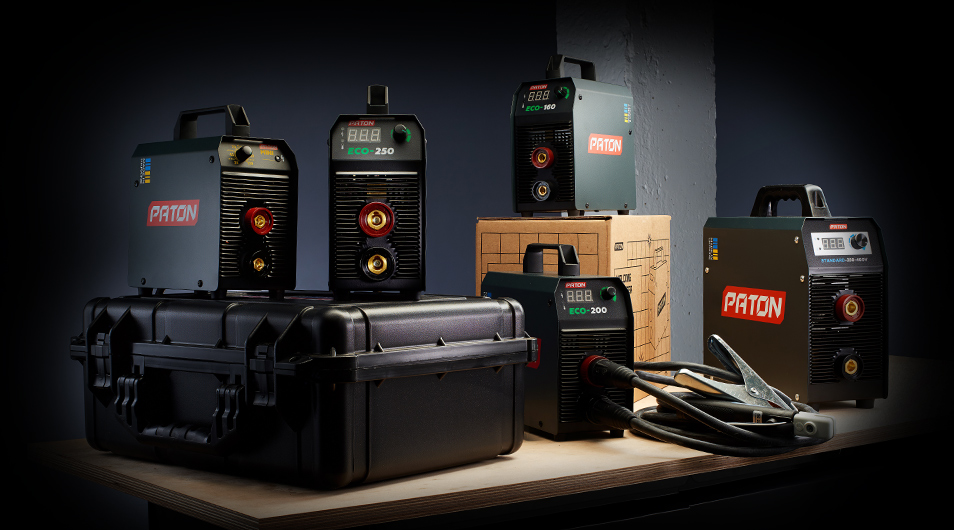
Best PATON welding inverters
Published:
19/08/2026
The best welding inverters are selected according to welding current, electrode diameter, duty cycle, mains voltage, and expected load. For home use, compactness and simple setup are important. A workshop requires a good power reserve, while production environments place more emphasis on duty cycle, arc stability, and the ability to operate for long periods.
PATON manufactures inverters for different operating conditions, from compact machines for garages and country houses to professional models for construction and industrial applications. Therefore, a rating of the best welding inverters should be viewed as a selection of solutions for different tasks rather than simply a comparison of maximum current.
How to choose a good welding inverter
Inverter technology makes it possible to create a compact welding machine that is convenient to adjust. However, a good welding inverter should not be selected only by its maximum current. It is important to determine the metal thickness, electrode diameter, frequency of use, and capabilities of the power supply in advance.
For home and garage use, a single-phase machine designed for a household power supply is usually sufficient. If welding is performed at a country house, construction site, or through a long extension cable, voltage fluctuations must be considered. During voltage drops, the inverter should maintain reliable ignition and a stable welding arc without frequent interruptions.
When choosing, it is worth evaluating the main parameters:
- maximum welding current and adjustment range;
- supported electrode diameter;
- duty cycle and operating duration;
- mains voltage and resistance to voltage fluctuations;
- availability of hot start, arc force, and anti-stick functions;
- weight, dimensions, and ease of transportation;
- control features and availability of a digital display.
Welding current is related to metal thickness and electrode diameter. Small parts do not require a large power reserve, while a weak machine will limit productivity when working with massive structures. Therefore, choosing a model only according to the principle that more amps are always better is not correct.
Hot start helps form the arc faster during ignition. Arc force maintains arc stability when the electrode moves closer to the metal. Anti-stick reduces current during a short circuit, making it easier to separate a stuck electrode from the workpiece.
Duty cycle is important for regular operation. The longer the welding passes, the greater the machine's ability to work without overheating or forced pauses should be. For on-site work, weight, compactness, and portability are also important.
7 most popular welding inverters
The top PATON welding inverters include machines for household, professional, and industrial applications. They differ in power, duty cycle, supply voltage, and adjustment capabilities. Therefore, the best welding inverter should be selected according to the operating conditions and the type of work to be performed.
PATON ECO-160
PATON ECO-160 is a compact MMA inverter for household manual arc welding. It is suitable for home, garage, country house, small installation jobs, and repair of metal structures.
The model can be used to repair fences, frames, brackets, and other products. With the correct choice of mode and electrode, the inverter provides reliable ignition and allows confident control of the welding arc.
Advantages
PATON ECO-160 is compact, mobile, and easy to control. The machine is convenient to store in a small workshop, transport between job sites, and quickly prepare for work. It is suitable for common electrode diameters and most standard household tasks.
Disadvantages
The welding current reserve is lower than that of larger models. If it is necessary to work regularly with thick metal, large-diameter electrodes, and long welding passes, it is better to choose a more powerful machine.
PATON ECO-250
PATON ECO-250 is suitable for users who need a larger welding current reserve. The model can be used in a home workshop, construction, installation, and metal structure repair.
Higher power expands the range of tasks and allows work with thicker parts and larger-diameter electrodes. At the same time, the advantages of inverter technology are retained, including convenient parameter adjustment and a stable arc.
Advantages
The main advantage of the ECO-250 is its good power reserve. The machine is suitable for manufacturing gates, frames, canopies, and fences where the capabilities of a compact household inverter may not be sufficient. The model can also be used for regular workshop work.
Disadvantages
For small household tasks, the high power may be excessive. When working at maximum settings, the condition of the power supply, wiring quality, and extension cable must be considered.
PATON MINI
PATON MINI is designed for users who value small dimensions and mobility. The machine is convenient to keep in a garage, take to a country house, transport in a vehicle, or use for small on-site jobs.
The model is designed for manual arc welding with stick electrodes and is suitable for small repair tasks. It can be used for joining metal parts, repairing fences, frames, and other structures where high welding current is not required.
Advantages
PATON MINI features small dimensions, simple operation, and easy transportation. The machine is quickly prepared for work and does not require much storage space. It is a practical option for learning MMA welding and occasional household repair.
Disadvantages
The compact format means a limited power reserve. For long welding operations, thick metal, and large-diameter electrodes, it is better to choose ECO or PRO models.
PATON PRO-160
PATON PRO-160 belongs to the professional series and is designed for more intensive operation. It is suitable for workshops, installation work, and users who require a high duty cycle.
The machine is suitable for those who do not need maximum power but require a stable process, advanced settings, and the ability to work longer than with a typical household inverter.
Advantages
PRO-160 is designed for a high duty cycle and regular operation. Hot start, arc force, and anti-stick functions help control ignition, maintain a stable arc, and reduce the risk of electrode sticking.
Disadvantages
For simple household repair, the capabilities of the professional series may be excessive. If the main task involves welding thick metal and using large-diameter electrodes, a more powerful model should be considered.
PATON PRO-250
PATON PRO-250 is designed for professional manual arc welding and intensive operation. The model is suitable for workshops, construction, installation, equipment repair, and metal structure fabrication.
The machine combines high welding current with a long duty cycle. It is suitable for different electrode diameters and tasks where process stability must be maintained during long operating periods.
Advantages
PRO-250 has a good power reserve and is designed for extended operation. Electronic functions help make ignition easier, reduce the risk of electrode sticking, and stabilize the arc. The machine is suitable for professional tasks where household models already limit productivity.
Disadvantages
For occasional home use, the potential of the PRO-250 may remain unused. The load on the power supply and equipment connection conditions should also be considered when choosing.
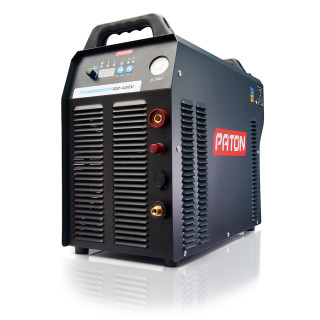
PATON PRO-630-400V
PATON PRO-630-400V belongs to the industrial welding inverter category. It is a powerful machine for production, construction, and work with large metal structures where high welding current is required.
The model is designed for three-phase 400 V power and intensive loads. It is suitable for thick metal, large-diameter electrodes, and long welding operations.
Advantages
The main advantages of the PRO-630-400V are high productivity, a large welding current reserve, and the ability to operate under heavy loads. The machine is aimed at professional welding stations and industrial production.
Disadvantages
This model is not suitable for a typical home or garage because it requires a three-phase 400 V supply. Its size, power, and productivity are intended primarily for professional applications.
PATON MINI-C
PATON MINI-C is a compact solution for household and small on-site jobs. The machine is designed for manual arc welding and is suitable for a garage, country house, home workshop, and occasional repairs.
The model is worth choosing when simple operation, low weight, and convenient storage are important. For standard household tasks, its capabilities are sufficient with the correct electrode and welding current selection.
Advantages
MINI-C is compact, mobile, and does not require much storage space. The machine is easy to transport and quick to prepare for work. It is suitable for repairing small metal products and simple installation operations.
Disadvantages
The machine's capabilities are limited by its household purpose. For extended operation, thick workpieces, and large electrode diameters, it is better to choose the ECO-250 or models from the professional PRO series.
Which welding inverter is better to choose
The best welding inverter cannot be determined only by maximum current. An industrial machine will not be the optimal choice for occasional garage repair, while a compact household model cannot replace a professional power source under constant high load.
For home, country house, and simple repair, PATON MINI, MINI-C, or ECO-160 are worth considering. They are compact, mobile, and suitable for common manual arc welding tasks. If a larger power reserve is required for a workshop, gate repair, canopies, and more massive structures, the ECO-250 is a suitable option.
For professional use, PRO-160 or PRO-250 should be considered. These models are designed for a high duty cycle and regular operation. PRO-160 is suitable where long operating time at moderate current is important, while PRO-250 provides a larger power reserve.
PRO-630-400V is intended for production and heavy welding work. It should be selected where three-phase power is available, and there is a need to work with large structures, thick parts, and high currents.
Good welding inverters should match the operating conditions, power supply, and actual load. Before purchasing, determine the required current, electrode diameter, operating duration, and the type of structures to be welded.
If the equipment will be used under different conditions, resistance to voltage fluctuations should also be considered. This parameter is especially important for garages, country houses, and construction sites. For workshops or production, the duty cycle, cooling, and the inverter's ability to maintain stable parameters under long loads should also be evaluated.
Summary
The best PATON welding inverters include compact household and powerful professional models. A top selection of welding inverters makes it possible to compare equipment by purpose, welding current, duty cycle, and power requirements. MINI, MINI-C, and ECO-160 are suitable for home use, ECO-250 can be chosen for more demanding tasks, while PRO-160 and PRO-250 are intended for professional operation. PRO-630-400V is designed for industrial use and three-phase power.