

-320x320.jpg "MIG/MAG Welding Machines")
-320x320.jpg "TIG AC/DC Welding Machines")




-320x320.jpg "Electrodes for High-Alloy Steel")
-320x320.jpg "Surfacing Electrodes")
-320x320.jpg "Electrodes for Cast Iron")








-320x320.jpg "Welding Masks")




-320x320.jpg "Welding Machine Carts")






Welding Torch Design
Published:
08/05/2026
Understanding welding torch design is important before choosing equipment, consumables, and an operating mode. The design affects arc stability, wire or electrode feeding, weld pool protection, and the welder’s comfort. Simply put, a welding torch is a working unit through which current, filler material, and shielding gas are supplied to the welding zone.
What a Welding Torch Is and What It Is Used For
A welding torch is part of the welding setup that directs energy and consumables into the working zone. It helps maintain the arc, form the weld, and protect molten metal from contact with air. The design depends on the type of welding, but the task remains the same: to ensure a stable process and a high-quality joint.
MIG/MAG Torches
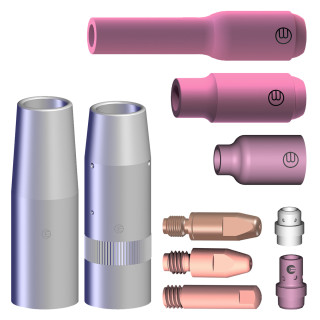
In MIG/MAG welding, the torch feeds wire, current, and shielding gas. The hose package contains the feed channel, power cable, and gas line, while the working end includes the torch neck, diffuser, current contact, contact tip, and nozzle. For such tasks, MIG/MAG welding torches are used with the required length, cooling type, and connection plug.
TIG Torches
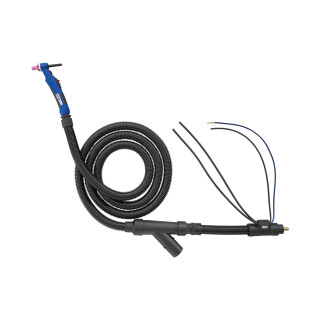
TIG torches work with a non-consumable electrode, most often made of tungsten. Shielding gas is supplied through the nozzle, while filler material, if needed, is introduced into the weld pool separately. For precise work with stainless steel, aluminum, and thin metal, TIG welding torches are suitable.
Gas Torches
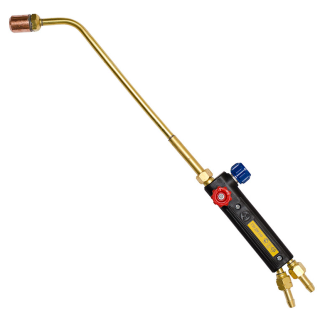
Gas torches are used for heating, brazing, cutting, and gas welding. Fuel gas and oxygen are mixed inside them, after which the flame is directed onto the metal. This design does not use wire, but it requires precise gas flow adjustment and the correct choice of tips.
What Elements a Welding Torch Consists Of
Welding torch design includes several parts that directly affect weld quality and the service life of the equipment. When the contact tip is worn, the nozzle is clogged, or the handle is damaged, the arc becomes unstable, gas shielding deteriorates, and the number of defects increases.
The main torch elements perform the following functions:
- the handle provides a comfortable grip and movement control;
- the hose package connects the torch to the welding machine;
- the torch neck directs the working part to the welding zone;
- the current contact transfers current to the wire;
- the diffuser distributes shielding gas evenly;
- the nozzle forms gas shielding around the arc;
- the contact tip guides the wire to the weld pool;
- the connection plug is responsible for compatibility with the machine.
All elements work as a single system. If one part is selected incorrectly, feeding deteriorates, spatter increases, the weld shape is disrupted, and consumables wear out faster.
How a Welding Torch Works During Welding
During welding, the machine supplies current to the torch, while the welder directs the arc to the required point. In MIG/MAG mode, wire moves through the channel, the current contact transfers current to it, and shielding gas exits through the nozzle and protects the weld pool from oxygen. As a result, the metal melts more steadily, and the weld becomes more even.
In TIG mode, current goes to the tungsten electrode, which creates the arc but does not melt like filler material. The welder can work without additional material or add a filler rod manually. This method provides high control over the weld and is suitable for precision work.
Cooling plays an important role. For medium loads, a system using air cooling is often sufficient. At high current and during long operation, liquid cooling is used to reduce overheating of the handle, torch neck, and current-carrying parts.
A properly selected torch makes the process more stable: the arc remains steady, the weld pool is protected, and the hand gets less tired. Therefore, before buying, it is worth considering the type of welding, working current, hose package length, consumables, and connection plug compatibility.
A welding torch is not just a holder, but an important working tool that affects weld quality, comfort, and equipment service life. By understanding welding torch design, it is easier to choose the right model, maintain consumables, and achieve a stable result.