

-320x320.jpg "MIG/MAG Welding Machines")
-320x320.jpg "TIG AC/DC Welding Machines")




-320x320.jpg "Electrodes for High-Alloy Steel")
-320x320.jpg "Surfacing Electrodes")
-320x320.jpg "Electrodes for Cast Iron")








-320x320.jpg "Welding Masks")




-320x320.jpg "Welding Machine Carts")






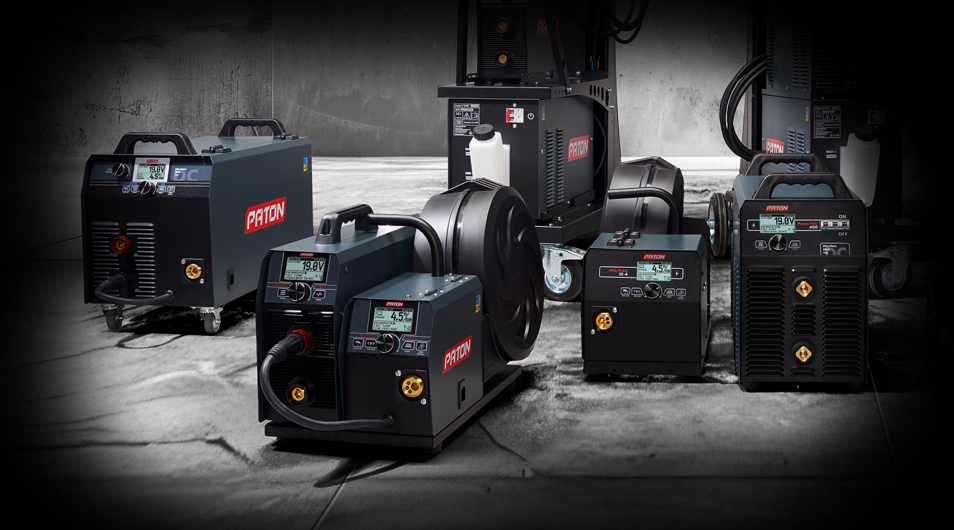
Top PATON MIG/MAG welders
Published:
19/08/2026
A good MIG/MAG welding machine should be chosen not only by its maximum current. For home use, workshops, and production, stable arc performance, consistent wire feeding, convenient adjustment, and suitability for specific tasks are important. Thin metal requires precise process control, while thick workpieces and long welds require a good power reserve and duty cycle.
PATON MIG/MAG welding machines are designed for household, professional, and industrial applications. Depending on the series, the equipment differs in power, wire feeding mechanism, control capabilities, and power supply requirements. Therefore, a top list of welding machines should be viewed as a selection for different working conditions.
How to choose a good MIG/MAG welding machine
Before buying, determine which metal and thickness you will weld most often. MIG/MAG welding is convenient for sheet steel, profiles, pipes, body panels, and metal structures. Welding wire is fed automatically, making it easier for the welder to maintain a stable speed and produce long welds.
One of the main parameters is welding current. Household tasks and thin metal usually do not require a large power reserve, while workshops and production environments need a machine that works confidently at higher settings. Mains voltage must also be considered: some models are designed for single-phase power, while powerful professional versions operate from 400 V.
When choosing, evaluate the main characteristics:
- welding current range and duty cycle;
- type and stability of the wire feeding mechanism;
- supported welding wire diameter;
- availability of synergic control and a digital display;
- torch connection type and Euro connector;
- ability to work with shielding gas and different materials;
- cooling system and resistance to long operating loads.
Synergic control simplifies setup: the user selects the main parameters, while the electronics help adjust related settings. This is especially convenient when changing material or wire diameter. Experienced welders also benefit from manual correction, allowing the arc to be adjusted more precisely for a specific joint.
Inverter technology provides electronic current control and helps maintain a stable arc. For regular work, torch quality, Euro connector reliability, smooth wire feeding, and consumable availability are also important. If the machine will be used every day, it is better to choose a model with a good load reserve.
Top 7 best MIG/MAG welding machines
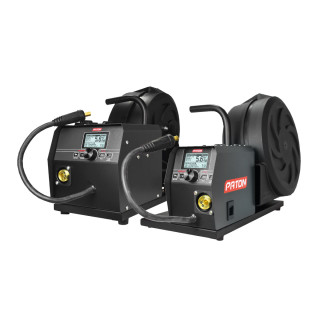
PATON StandardMIG-200
PATON StandardMIG-200 is a versatile welding machine for workshops, garages, and regular welding work. The model is suitable for MIG/MAG and can also handle additional tasks in other supported modes. It is designed for a single-phase power supply and combines a sufficient current reserve with convenient control.
Advantages
Advantages include stable wire feeding, convenient setup, and versatility. The machine is suitable for regular workshop use, while the standard Euro connector makes torch connection and replacement easier. Synergic functions help select the required mode faster.
Disadvantages
For continuous welding of thick metal at high current, the model may not provide enough reserve. In such conditions, it is better to choose a more powerful machine or the professional ProMIG series.
PATON StandardMIG-250
PATON StandardMIG-250 is designed for higher welding current and is suitable for users who need additional power. It can be used in workshops, metal structure fabrication, and regular MIG/MAG welding.
Advantages
StandardMIG-250 is suitable for a wide range of work and provides a good balance between power and versatility. A stable arc and adjustable wire feeding help produce neat welds, while process adjustment makes the machine suitable for different materials.
Disadvantages
If the equipment is required only for occasional thin-metal work, the power reserve may be excessive. For intensive production with continuous high loads, more productive models should be considered.
PATON EuroMIG
PATON EuroMIG is a compact solution for garages, small workshops, and jobs where mobility and convenience are important. The machine is suitable for wire welding and is intended for moderate loads.
Advantages
The main advantages are compactness, low weight, and simple control. The machine is convenient where maximum welding current is not required. It is suitable for beginner users and regular household repair.
Disadvantages
For thick parts and long periods at high power, the capabilities of EuroMIG may be insufficient. In such cases, it is better to choose StandardMIG-200, StandardMIG-250, or a ProMIG model.
PATON StandardMIG-160
PATON StandardMIG-160 is a welding machine for home, garage, and semi-professional tasks. It is suitable for thin metal, repair, small structure fabrication, and workshop work.
Advantages
StandardMIG-160 is compact, easy to control, and suitable for thin metal. The machine supports different processes, while a stable arc and adjustable feed help achieve a quality joint without complicated preparation.
Disadvantages
For long welding of thick workpieces, it is better to choose a more powerful model. The welding current reserve of StandardMIG-160 is lower than that of the 200 and 250 versions.
PATON ProMIG-200-15-2
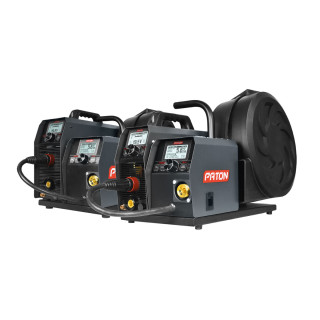
PATON ProMIG-200-15-2 belongs to the professional series and is designed for regular operation. The model has a two-roll wire feeding mechanism and is suitable for workshops, repair, installation, and metal structure fabrication.
Advantages
ProMIG-200-15-2 is designed for intensive use and provides stable wire feeding. Professional construction, convenient control, and the ability to work in several processes make the machine versatile for workshops.
Disadvantages
For a user who welds only several times a month, the professional capabilities may be excessive. For thicker metal and higher current, it is better to choose ProMIG-250 or a higher model.
PATON ProMIG-250-15-2
PATON ProMIG-250-15-2 is designed for professional MIG/MAG welding and regular loads. It is suitable for workshops, construction, equipment repair, and metal structure fabrication.
Advantages
ProMIG-250-15-2 has a good power reserve and is suitable for long professional operation. The machine covers a wide range of tasks, maintains arc stability, and allows the welder to adjust the process precisely for a specific job.
Disadvantages
For occasional home work, the model may be more productive than necessary. If particularly stable feeding of soft or thick wire is needed under high load, a version with a four-roll mechanism should be considered.
PATON ProMIG-350-15-4-400V
PATON ProMIG-350-15-4-400V is a powerful professional machine for a three-phase 400 V power supply. It is designed for intensive welding, large metal structures, and tasks that require high current and reliable wire feeding.
Advantages
The main advantages include high welding current, four-roll feeding, professional construction, and the ability to work under heavy loads. The model is well suited for thick metal and long welding operations.
Disadvantages
The machine requires a three-phase 400 V supply and is not intended for typical household use. For a garage or small jobs, its power and capabilities will be excessive.
Which MIG/MAG welding machine to choose
A good welding machine should match the actual load. For garages, repairs, and thin metal, EuroMIG or StandardMIG-160 can be considered. They are suitable where compactness, simple setup, and moderate welding current are important.
StandardMIG-200 is a versatile option for a home or small professional workshop. If a larger power reserve is needed, StandardMIG-250 is a better choice. These models are convenient for regular work with profiles, sheet steel, and different metal structures.
For professional operation, ProMIG-200-15-2 and ProMIG-250-15-2 are more suitable. They should be chosen when a high duty cycle, reliable wire feeding, and long operating periods are important.
ProMIG-350-15-4-400V is intended for production and demanding tasks. Its four-roll feeding mechanism, 400 V power supply, and high welding current make it suitable for intensive use and large structures.
Before buying, evaluate not only current but also the type of power supply, wire diameter, shielding gas, operating duration, and mobility requirements. If the machine is selected for actual working conditions, setup will be easier and the welding arc will remain stable throughout the working range.
Summary
The top PATON MIG/MAG welding machines include compact, versatile, and professional models for different conditions. EuroMIG and StandardMIG-160 are suitable for moderate loads, StandardMIG-200 and StandardMIG-250 provide more capabilities for workshops, while the ProMIG series is designed for intensive operation. A good MIG/MAG welding machine should be selected according to current, power supply, feeding mechanism, duty cycle, and the tasks to be performed.