

-320x320.jpg "MIG/MAG Welding Machines")
-320x320.jpg "TIG AC/DC Welding Machines")




-320x320.jpg "Electrodes for High-Alloy Steel")
-320x320.jpg "Surfacing Electrodes")
-320x320.jpg "Electrodes for Cast Iron")



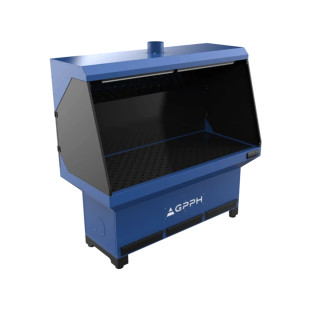
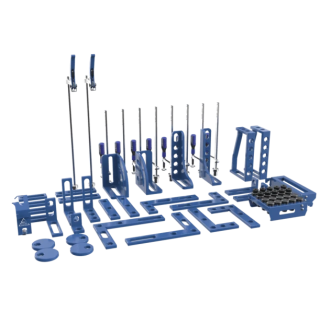
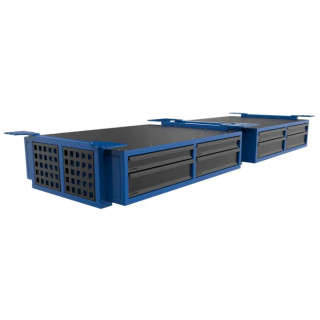





-320x320.jpg "Welding Masks")




-320x320.jpg "Welding Machine Carts")






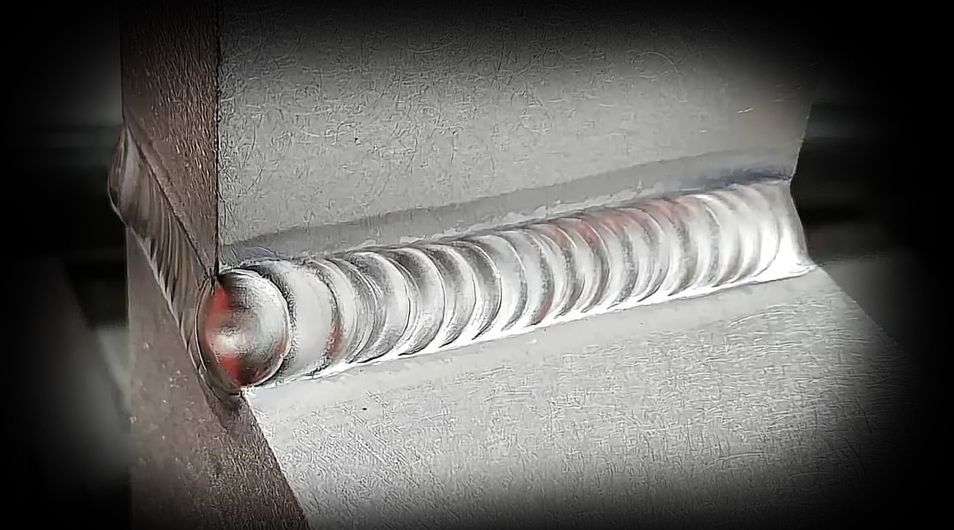
Welding Aluminum with an Electrode
Published:
08/05/2026
Welding aluminum with an electrode is used when it is necessary to repair or join parts without a TIG machine or a semi-automatic welding machine. This method requires careful preparation, the correct choice of consumables, and precise arc control. Aluminum dissipates heat quickly, has high fluidity, and is covered with a strong oxide film, so it is more difficult to work with than steel.
Can Aluminum Be Welded with an Electrode and When Is This Method Used
Aluminum can be welded with an electrode, but this method is more often used for repairs, small jobs, and situations where there is no access to TIG welding. Manual arc welding of aluminum is suitable for cast parts, housings, brackets, profiles, and elements where the weld appearance is not the main requirement.
It is important to understand how to weld aluminum with an electrode because the metal is sensitive to overheating and contamination. If the surface is poorly cleaned, porosity, lack of fusion, and an unstable weld pool may appear. A special coated electrode for aluminum is used for this work, not standard electrodes for steel.
Features of Welding Aluminum with an Electrode
The main difficulty with aluminum is the oxide film, whose melting temperature is much higher than that of the metal itself. Therefore, before welding, the surface is cleaned mechanically and degreased. To break down the film and maintain stable arc burning, reverse polarity is used, with the electrode connected to the positive terminal.
During welding, it is important to control heat input. If there is too little energy, lack of fusion occurs; if there is too much, deformation and burn-through appear. A short arc helps keep the process under control and reduces spatter. After each pass, slag must be removed completely, especially if a multilayer weld is being made.
For quality work, several conditions should be considered:
- the surface must be cleaned of dirt, oil, and oxides;
- preheating helps reduce rapid heat dissipation;
- the electrode must match the aluminum grade;
- the arc must be kept short and stable;
- slag must be removed after each pass;
- the part should be cooled without sudden temperature changes.
This preparation reduces the risk of porosity and helps obtain a dense weld. However, even with the correct technique, welding aluminum with an electrode requires experience because the metal melts quickly and changes the shape of the pool.
What Is Needed for Welding Aluminum with a Standard Inverter
Welding aluminum with a standard inverter is possible if the machine supports MMA mode, a stable arc, and operation with reverse polarity. Special welding electrodes for aluminum, a stainless steel brush, a degreasing agent, and a ground clamp with good contact are also needed.
Reliable welding inverters are suitable for this work, as they allow precise current adjustment and stable arc burning. At the same time, it is important to consider the electrode diameter, part thickness, and weld position.
Cathodic cleaning helps break down the oxide film with the correct polarity, but it does not replace cleaning. In this case, the filler metal is already contained in the electrode, while the coating protects the weld pool and forms slag. If the settings are selected incorrectly, the weld may turn out loose and porous.
How to Weld Aluminum with an Electrode Correctly
Before starting work, the part is cleaned to a metallic shine, degreased, and preheated if necessary. Then the current is set according to the electrode diameter, and a test weld is made on similar material. This helps understand how the pool behaves and whether there is enough heat for normal penetration.
Manual arc welding of aluminum is performed without a long arc or sudden movements. The electrode is guided steadily, with a slight angle, without stopping in one place. Due to the high fluidity of aluminum, it is important to make sure the weld pool does not spread too widely.
To understand how to weld aluminum with an electrode in practice, it is best to start with simple horizontal welds. Vertical and overhead positions are more difficult because molten metal is harder to hold. After each pass, slag is removed, the surface is checked, and only then the work continues.
Welding aluminum with an electrode is suitable for repairs and specific tasks when aluminum parts need to be joined with a standard MMA inverter. For manual arc welding of aluminum to produce a reliable result, it is important to clean the metal, choose the correct electrode, use reverse polarity, and control preheating, the arc, and cooling.