

-320x320.jpg "MIG/MAG Welding Machines")
-320x320.jpg "TIG AC/DC Welding Machines")




-320x320.jpg "Electrodes for High-Alloy Steel")
-320x320.jpg "Surfacing Electrodes")
-320x320.jpg "Electrodes for Cast Iron")








-320x320.jpg "Welding Masks")




-320x320.jpg "Welding Machine Carts")






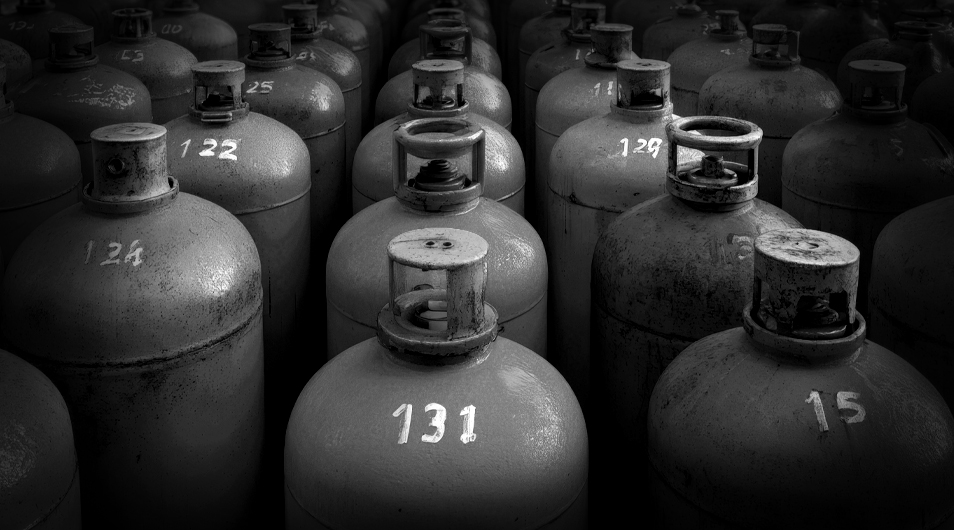
What Gas Is Needed for a Semi-Automatic Welder?
Published:
24/04/2026
When the question arises of what gas is needed for a semi-automatic welder, it is important to consider not only the machine itself, but also the metal, the operating mode, and the requirements for the weld. The type of shielding used in the welding zone affects the arc, penetration, the amount of spatter, consumption, and the overall setup of the process.
In practice, what gas to use for a semi-automatic welder is determined by the material and the task. Different options are suitable for steel, stainless steel, and aluminum because the same cylinder does not provide the same result for every metal. Pressure, equipment, and properly selected wire also matter.
The role of shielding gas
During operation, the semi-automatic welder melts the metal with an arc, and a weld pool forms in the joint area. If the molten metal is left without protection, it is affected by air, which can make the weld porous, uneven, and less strong. That is why gas in this type of welding is an essential part of the process.
The shielding medium affects not only the weld itself, but also the behavior of the arc. It influences burning stability, penetration depth, the amount of spatter, and the ease of guiding the torch. The more accurately the flow rate and pressure are selected, the easier it is to control the result and the cleaner the metal looks after welding.
Main types of gases
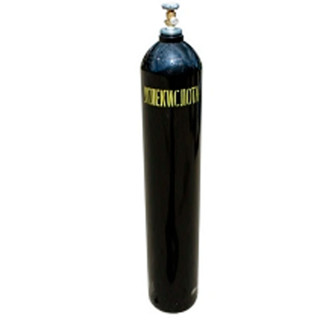
To understand what gas is used for semi-automatic welding, it is important to divide all options into two main groups. In semi-automatic welding, inert gases and active gases are used. In addition, a mixture is often used in practice, helping to achieve a more balanced result.
Inert gases
Inert gases are used where a softer arc and careful protection of the weld pool are needed. Most often, this option is chosen for materials that are sensitive to the quality of the environment, especially when working with stainless steel or aluminum.
The following options are usually included among inert gases for this task:
- argon for working with aluminum and alloys;
- an inert mixture for a more stable process;
- a shielding medium for accurate weld formation.
An inert gas helps better control welding on thin metal and reduces the likelihood of unnecessary defects. Therefore, if it is necessary to work with aluminum or obtain a cleaner weld, this option usually proves to be preferable.
Active gases
Active gases primarily include carbon dioxide and compositions where it is used as the base or as part of a mixture. These are most often used when working with ordinary steel and when the process requires practicality, availability, and reliable penetration.
When choosing active shielding, the following points are usually taken into account:
- Carbon dioxide provides good penetration and is suitable for working with steel.
- A mixture helps make the arc softer and reduce spatter.
- Pressure and flow rate must correspond to the metal thickness and the operating mode.
- Gas feed adjustment affects weld stability and the overall result.
If a clear and practical option is needed for most everyday tasks, active gas remains the most common solution. At the same time, it is important to remember that too low a flow rate worsens shielding, and too high a pressure can also make the process less stable.
Gas selection for a specific metal
For ordinary carbon steel, carbon dioxide or an argon-based mixture is most often used. If availability and reliable penetration are the main priorities, carbon dioxide is chosen. If it is necessary to reduce spatter, make the weld smoother, and improve arc behavior, a mixture is more often used.
For stainless steels, the requirements for the shielding environment are higher, so a more delicate protection is usually chosen here. For aluminum, an inert gas is used more often because this metal is sensitive to welding conditions, and stable shielding helps control the weld better and reduce the risk of defects.
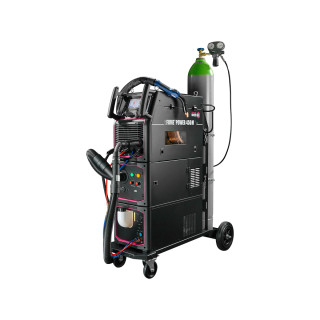
When selecting the system, it is important to consider not only the gas, but also the entire set. For stable operation, semi-automatic welding machines with precise mode adjustment are needed. Equally important is welding wire, which must match the metal, the settings, and the selected shielding medium.
To briefly answer the question of what gas to use for a semi-automatic welder, carbon dioxide or a mixture is more often chosen for steel, while inert shielding is usually selected for aluminum. The decision always depends on the metal being welded, the required weld, and how the equipment is set up.
What gas is needed for a semi-automatic welder depends on the metal, the welding mode, and the quality requirements for the joint. For steel, carbon dioxide or a mixture is used more often, while for aluminum an inert gas is chosen. The correct choice of shielding, accurate flow rate, and proper setup make it possible to achieve a stable arc and a neat weld.