

-320x320.jpg "MIG/MAG Welding Machines")
-320x320.jpg "TIG AC/DC Welding Machines")




-320x320.jpg "Electrodes for High-Alloy Steel")
-320x320.jpg "Surfacing Electrodes")
-320x320.jpg "Electrodes for Cast Iron")









-320x320.jpg "Welding Masks")




-320x320.jpg "Welding Machine Carts")






How Does Welding Work?
Published:
24/04/2026
To understand the technology, it is important to see the logic of the process itself, not just a set of terms. In any system, the task is the same: to heat the metal in the joint area, create a molten pool, and obtain a strong connection after cooling. The result is influenced by current, the type of machine, and the protection of the weld pool. Edge preparation, surface cleanliness, and correct parameter settings are also essential.
What is welding
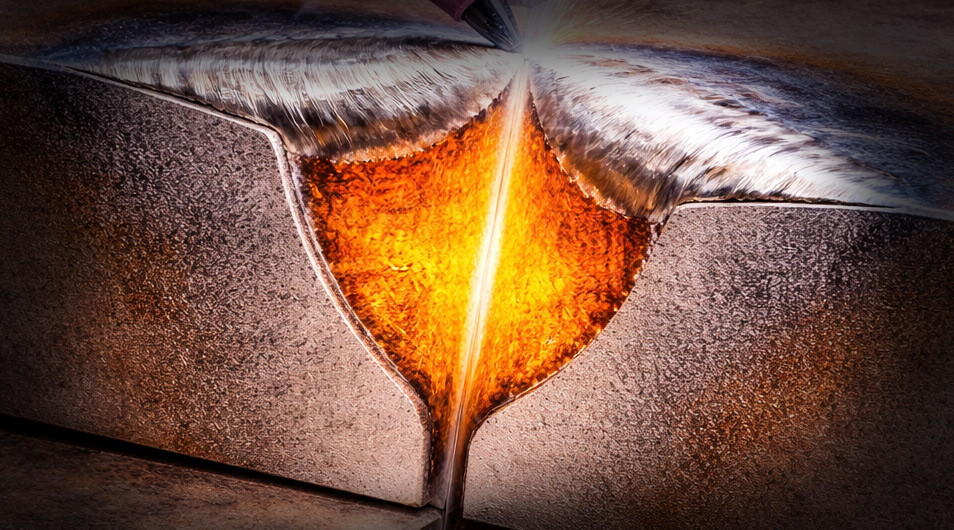
Welding is a process in which parts are joined by local heating and the subsequent formation of a common weld seam. In the working area, an arc or another heat source appears, the metal turns into molten material, and then crystallization begins. As a result, a strong joint is formed that can withstand loads.
Simply put, the principle of welding is the controlled melting of the edges and filler material. When the molten metal cools, a weld with the required geometry and density is formed. The depth of penetration and the quality of the finished joint depend on the operating mode.
Main types of welding
To make the technology easier to understand, it is worth dividing the main methods by filler feeding and the type of molten metal protection. In practice, the most common methods are MMA manual arc welding, MIG/MAG semi-automatic welding, and TIG argon arc welding. Special solutions are also used in production where speed, precision, or specific joint properties are important.
Manual arc welding (MMA)
In MMA, a consumable coated electrode is used. An arc forms between it and the workpiece, heating the metal, creating the pool, and forming the weld. The electrode coating also creates protection and helps reduce the effect of air on the molten metal.
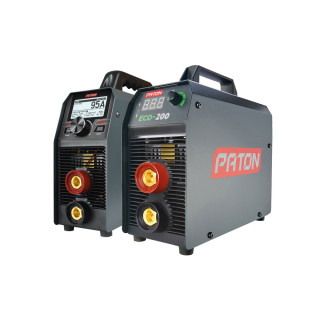
This method is well suited for explaining the basic principles of operation. The welder maintains the arc, controls the current, and guides the process manually. This method is valued for its simple equipment, mobility, and the ability to work in different positions. For household and professional tasks, you can choose MMA welding machines.
Semi-automatic welding (MIG/MAG)
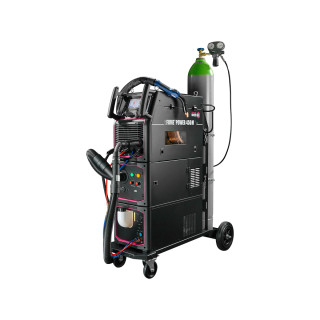
Many people are interested in how semi-automatic welding works because this method combines convenience and high speed. Wire is continuously fed into the torch, an arc burns between the wire and the part, and shielding gas protects the weld area from air. Because of this, the process remains stable, and the joint turns out even and clean.
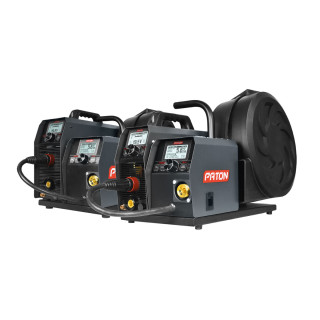
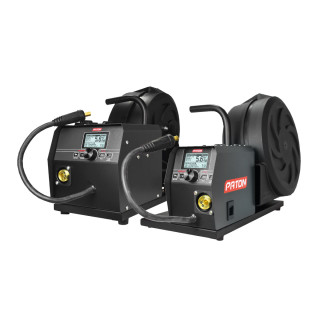
The main advantage of MIG/MAG is the continuous filler feed. The wire is supplied at a set speed, voltage and current are maintained by the machine, and the welder controls the torch movement. For workshops, service applications, and manufacturing, welding semi-automatic machines are in demand.
Argon arc welding (TIG)
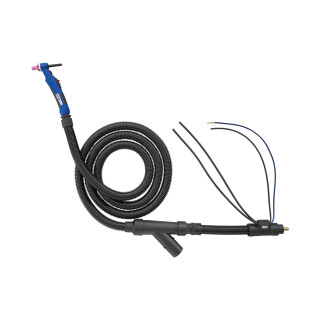
When it is necessary to explain how argon arc welding works, precision becomes the main focus. A non-consumable tungsten electrode is used here, and the molten metal is protected by inert gas. If necessary, filler material is added separately, so the welder can better control the pool, the weld, and the edge shape.
In practice, how TIG welding works is especially clear when working with thin metal and critical parts. The arc remains stable, and the process itself allows accurate control of heating. For such tasks, argon welding is a suitable option.
To briefly summarize how TIG welding works, the operator controls the torch, filler, and part heating separately. This makes the process slower than semi-automatic welding, but it provides a high level of control over joint quality.
Other technologies
In addition to the main methods, other solutions are also used: flux-cored wire, spot welding, plasma processes, laser joining, and submerged arc welding. Such technologies are selected according to the specific metal, workpiece thickness, weld requirements, and production conditions.
Shielding gas for welding
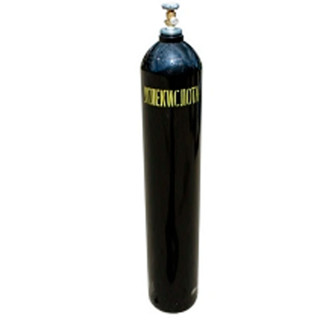
Shielding gas is needed to isolate the molten metal from oxygen, moisture, and impurities in the air. Without such protection, the metal oxidizes more actively, and pores and other defects may appear in the weld. That is why how semi-automatic welding works and how argon arc welding works is always connected with the correct gas choice.
Different shielding options are used for different tasks:
- argon for TIG and work with non-ferrous metals;
- carbon dioxide for a range of MIG/MAG modes;
- gas mixtures for a stable arc and better weld formation.
After choosing the gas, it is important to set the flow rate correctly. If the protection is weak, the molten metal comes into contact with air, and if the flow is too high, the gas stream can disturb process stability.
Types of welding machines
By design, welding machines are divided into several groups. In the past, transformers were widely used, but today inverters are chosen more often because they are more compact and control parameters more precisely. Modern equipment allows flexible adjustment of current, voltage, and additional functions for a specific process.
When choosing a machine, it is important to consider the following points:
- For simple jobs and field work, an MMA inverter is often chosen.
- For body repair and long welds, a semi-automatic machine is convenient.
- For precise work with stainless steel and aluminum, TIG is selected.
- For production, the machine is chosen according to the material, thickness, and load mode.
If the user understands the task and the required welding principle, choosing a machine becomes much easier. It is important to consider not only power, but also arc stability, ease of adjustment, and compatibility with consumables.
Safety
Any welding process is associated with high temperature, bright radiation, and the risk of injury to skin and eyes. During work, a helmet, gloves, protective clothing, and properly functioning equipment are required. Ventilation is also essential because gas, fumes, and metal particles are dangerous in enclosed spaces.
Safety always remains a mandatory part of the job. It is necessary to check cables, torch condition, gas supply, and the cleanliness of the work area. The more stable the process organization is, the higher the weld quality and the lower the risk of defects or injuries.
Understanding how welding works helps you choose the right technology for a specific task. This is important both for a home workshop and for continuous production work. If you take into account the type of metal, molten pool protection, and machine capabilities, you can achieve a reliable joint, an even weld, and a predictable result.