

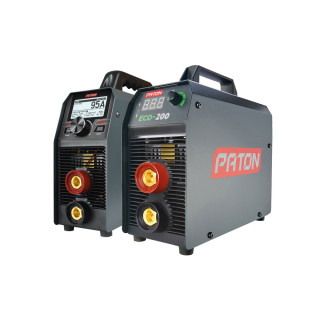
-320x320.jpg "MIG/MAG Welding Machines")
-320x320.jpg "TIG AC/DC Welding Machines")




-320x320.jpg "Electrodes for High-Alloy Steel")
-320x320.jpg "Surfacing Electrodes")
-320x320.jpg "Electrodes for Cast Iron")










-320x320.jpg "Welding Masks")




-320x320.jpg "Welding Machine Carts")









What Is Pulse Welding with a Semi-Automatic Welding Machine?
Published:
08/05/2026
Pulse welding with a semi-automatic welding machine is a MIG/MAG mode in which the welding current is supplied in short pulses rather than as a steady flow. The arc remains stable, the metal droplet separates in a controlled way, and the weld pool overheats less. This approach reduces spatter, deformation, and excessive heat input, so the mode is used for neat welds.
To explain what pulse welding is, it is a method of precisely controlling metal transfer from the wire into the weld. The inverter and microprocessor change the current parameters so that the filler metal melts evenly and penetration remains stable.
How the Pulse Mode Works in MIG/MAG Welding
In MIG/MAG welding, the wire is fed into the arc zone and melts under the action of current. When pulse mode is enabled on the semi-automatic machine, the unit forms two current levels: the base current maintains the arc, while the peak current separates the droplet from the end of the wire. As a result, metal transfer takes place smoothly, without rough short-circuiting.
The droplet transfers into the weld pool at the moment of the pulse, making the process more predictable. The welder can see the pool better, guide the weld more easily, and get less spatter. This is important when working with aluminum, stainless steel, thin sheet metal, and parts where overheating can damage the shape of the product.
How Pulse Welding Differs from a Regular Semi-Automatic Welding Machine
A regular semi-automatic welding machine operates with more constant parameters. Weld quality depends on voltage, wire feed speed, gas, filler diameter, and the welder’s experience. If the settings are selected inaccurately, spatter, an uneven bead, weak penetration, or overheated edges may appear.
Pulse mode controls the process more precisely. The microprocessor sets the frequency, pulse duration, and current level, while the inverter quickly responds to arc changes. That is why pulse welding is easier to understand in practice: it is not a separate process but a more controlled version of MIG/MAG.
The main difference is lower thermal load with good metal transfer. A regular mode heats the part faster, while pulse welding with a semi-automatic welding machine doses the energy. This produces a clean weld, reduces spatter, and helps prevent deformation after cooling.
Advantages of Pulse Mode
Pulse mode on a semi-automatic welding machine is useful where a stable result is needed without long cleaning after welding. It does not eliminate the need for proper metal preparation, but it makes the process calmer and more repeatable. This is especially noticeable on long welds, thin parts, and materials sensitive to overheating.
The main advantages of the mode include:
- less spatter and a cleaner area next to the weld;
- reduced heat input and a lower risk of burn-through;
- a stable arc and controlled metal transfer;
- a neat weld pool that is easier to hold;
- reliable penetration without excessive overheating;
- less deformation and less post-weld processing.
With correctly selected settings, the weld comes out even, and the surface around it remains cleaner. Therefore, pulse mode reduces the time needed to fix defects.
What Tasks Pulse Welding Is Suitable For
Pulse welding with a semi-automatic welding machine is suitable for tasks where precision, appearance, and heat control are important. It is used for welding aluminum, stainless steel, thin sheet metal, bodywork elements, tanks, decorative products, and parts made of non-ferrous alloys.
The mode is also useful in manufacturing, equipment repair, and structural fabrication where it is necessary to preserve the geometry of the part. A stable arc, precise wire feed, and controlled droplet help achieve a high-quality result even in difficult areas.
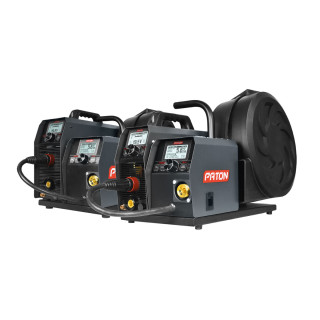
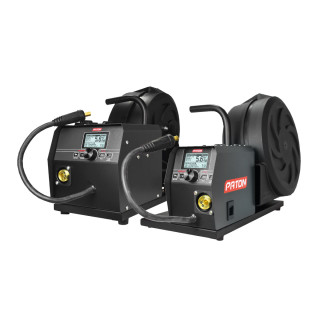
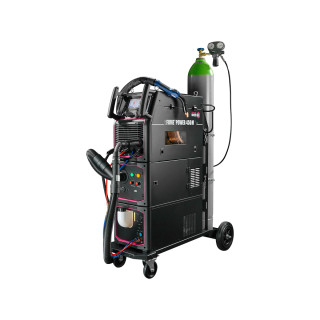
For such tasks, it is important to choose equipment with reliable control of MIG/MAG modes. Modern MIG/MAG welding machines allow you to work with different materials, thicknesses, and wire types, selecting settings for real welding conditions.
How Pulse Mode Is Set Up and Why Synergy Is Needed
Setup depends on the material, wire diameter, shielding gas, part thickness, and required weld shape. In manual mode, the welder selects the parameters independently. In synergic mode, the machine uses ready-made algorithms: it is enough to specify the material, wire, and gas, after which the inverter suggests basic values.
Synergy is needed because the pulse process has more variables than regular welding. Wire feed speed, voltage, pulse frequency, peak current, and arc length must be coordinated. If the balance is disturbed, the droplet transfers unstably.
It is better to perform setup step by step:
- Select the material, wire diameter, and shielding gas.
- Specify the metal thickness or working current.
- Check the arc and bead on a test piece.
- Adjust the arc length and heat input.
- Evaluate penetration and the amount of spatter.
After checking, pulse mode on a semi-automatic welding machine can be more accurately adapted to the task. Synergy speeds up the start, but the final adjustment depends on the weld position, edge preparation, and requirements for the appearance of the joint.
Now it is clear what pulse welding is: it is a controlled MIG/MAG mode that stabilizes droplet transfer, reduces overheating, and helps produce a clean weld. Pulse welding with a semi-automatic welding machine is especially useful where neatness, stable penetration, and minimal deformation are important.