

-320x320.jpg "MIG/MAG Welding Machines")
-320x320.jpg "TIG AC/DC Welding Machines")




-320x320.jpg "Electrodes for High-Alloy Steel")
-320x320.jpg "Surfacing Electrodes")
-320x320.jpg "Electrodes for Cast Iron")








-320x320.jpg "Welding Masks")




-320x320.jpg "Welding Machine Carts")






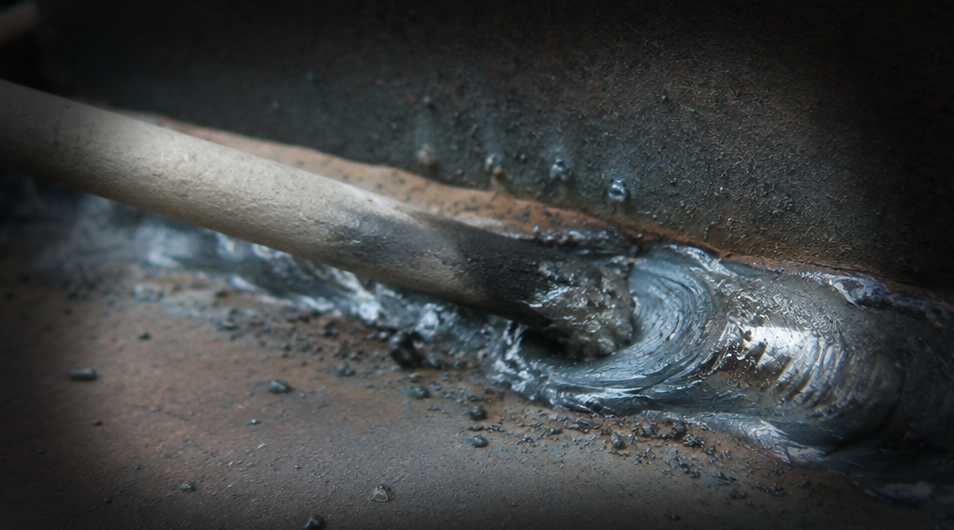
Why do welding electrodes stick?
Published:
20/07/2026
The situation when an electrode sticks to metal is familiar to many beginner welders. The arc does not ignite, the rod catches on the surface, the coating crumbles, and the work stops. Most often, the problem is not caused by a single factor, but by a combination of current, electrode condition, metal surface, and mains voltage.
If the electrode sticks, you should not immediately replace the machine. First, check the mode, rod diameter, ignition quality, and part preparation. With correct settings, the inverter forms a stable arc, and the electrode melts evenly without sticking to the metal.
Main causes of electrode sticking
To understand why the electrode sticks to metal, it is necessary to evaluate the welding conditions. Sticking is affected by moisture in the coating, low current, rust, scale, poor ground contact, and voltage drop. Sometimes the problem appears even with a properly working machine if an unsuitable mode is selected.
Damp electrodes
Moisture in the coating worsens ignition and makes the arc unstable. The electrode begins to hiss, stick, create pores, and produce extra spatter. This is especially noticeable if consumables have been stored for a long time in an open package, kept in a damp garage, or moved from cold to a warm room.
To restore working properties, baking is required if allowed by the manufacturer. After drying, the coating holds the arc better, and the metal melts more stably. For regular work, it is better to use high-quality welding electrodes and store them in a dry place.
Incorrectly selected welding current
Low current is one of the most common causes of sticking. The electrode does not have time to melt properly, the arc breaks, and the rod tip sticks to the metal. If the current is too high, the metal overheats, the coating burns out faster, and the weld becomes rough.
Welding current is selected according to electrode diameter, part thickness, and weld position. A thin electrode requires a lower value, while a thick one requires a higher value. If the electrode sticks at the beginning of the weld, it is worth slightly increasing the current and checking whether arc ignition becomes easier.
Dirty metal surface
Rust, paint, oil, scale, and dirt interfere with normal contact. The arc ignites worse, jumps across the surface, and quickly goes out. As a result, the welder presses harder on the electrode, and this only increases the risk of sticking.
Before welding, the joint area must be cleaned down to clean metal. It is also important to check the ground clamp. If the contact is weak, current flows unstably even with correct machine settings.
Mistakes during ignition and arc handling
Incorrect ignition often causes the electrode to stick to the metal immediately. If the tip is held on the surface for too long, the rod heats up, but the arc does not form. It is better to ignite the arc with a light touch or a motion similar to striking a match.
After ignition, a short but stable arc should be maintained. Too large a distance causes the arc to break, while too small a distance leads to sticking. It is important to move the electrode smoothly, without jerks or excessive pressure on the weld pool.
Low mains voltage
If there is a strong voltage drop in the mains, the welding machine cannot maintain the arc stably. This often happens at a country house, in a garage, with weak wiring, or when using a long extension cable. As a result, the voltage drops, ignition worsens, and the electrode begins to stick.
For such conditions, it is better to use an inverter designed to work with unstable power supply. It is also worth checking the extension cable cross-section, socket condition, and contact quality. Sometimes the problem disappears after connecting to a more reliable line.
Low-quality electrodes
Sometimes the cause is not the welder or the machine. Low-quality electrodes may have uneven coating, poor geometry, unstable composition, or traces of moisture. They ignite worse, crumble faster, and stick more often.
If the same mode works normally with other electrodes, the problem is probably in the consumables. For stable welding, it is better to choose electrodes for the specific metal, weld position, and machine type.
How to avoid electrode sticking
If the electrode sticks, start with simple checks. In most cases, proper metal preparation, dry consumables, and correct current help. You should not try to weld through rust or compensate for poor contact by pressing harder on the electrode.
To reduce the risk of sticking, follow the main rules:
- store electrodes in a dry place and do not use damp consumables without drying;
- select current according to electrode diameter and metal thickness;
- clean the welding zone from rust, paint, oil, and scale;
- check ground contact before starting work;
- use a short arc and do not press the electrode against the metal;
- monitor mains voltage and do not use an overly long, thin extension cable;
- choose electrodes suitable for the metal and welding type.
After setup, it is useful to make a test weld on a similar part. If the arc ignites easily, the sound is even, and the electrode melts without jerks, the mode is selected correctly. If the rod sticks again, check the current, surface, consumables, and power supply step by step.
Welding machine functions that help avoid sticking
A modern inverter may have functions that make ignition easier and help maintain the arc. Anti-stick reduces current during a short circuit if the electrode touches the metal and does not detach. This makes the rod easier to separate and reduces coating damage.
Hot start briefly increases current at the moment of ignition. This helps form the arc faster, especially when working with metal that is not perfectly prepared or with electrodes that are harder to ignite. This function is useful for beginner welders.
Arc force helps maintain burning when the distance between the electrode and the metal becomes too small. The machine briefly adds current, the arc does not go out, and the welder gets more control over the process.
However, functions do not replace proper preparation. If the electrodes are wet, the metal is covered with rust, and the mains voltage drops sharply, even a good inverter will not solve the problem completely. The best result comes from combining a properly working machine, dry consumables, a clean surface, and the correct mode.
Summary
Electrodes stick because of moisture in the coating, low current, dirty metal, ignition mistakes, voltage drops, or poor consumable quality. To understand why the electrode sticks to metal, it is necessary to check the electrode, mode, ground contact, part surface, and mains operation step by step.