

-320x320.jpg "MIG/MAG Welding Machines")
-320x320.jpg "TIG AC/DC Welding Machines")




-320x320.jpg "Electrodes for High-Alloy Steel")
-320x320.jpg "Surfacing Electrodes")
-320x320.jpg "Electrodes for Cast Iron")








-320x320.jpg "Welding Masks")




-320x320.jpg "Welding Machine Carts")






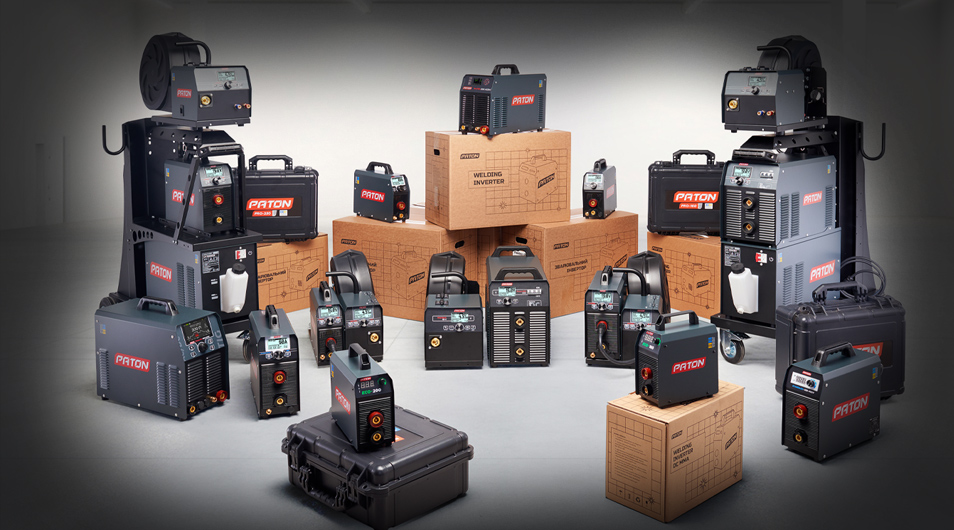
Best PATON welding machines ranking
Published:
20/07/2026
The best PATON welding machines are chosen not only by maximum current or price. It is important to consider the type of work, metal thickness, mains voltage, welding mode, productivity, and ease of setup. For some tasks, a compact MMA inverter is enough, while others require a semi-automatic welding machine, a TIG machine, or a multiprocess machine with extended capabilities.
Good welding is achieved when the machine matches the material, electrode, wire, and working conditions. This rating includes popular PATON models for home use, workshops, repair, installation, and professional applications. Each model has its strengths and limitations, so it should be selected for specific tasks.
How to choose a welding machine
Before buying, you need to determine which welding process will be the main one. MMA is suitable for working with stick electrodes, repair, installation, and on-site tasks. MIG/MAG is convenient for long welds, bodywork, and serial welding where welding wire is used. TIG welding is needed for precise joints, stainless steel, thin metal, and neat welds.
It is also important to consider mains voltage. For home use and a small workshop, 220/230 V machines are more often chosen. For production and heavy loads, 400 V models may be used. The higher the welding current and duty cycle, the more capabilities the machine has when working with thick metal.
When choosing, it is worth evaluating the following parameters:
- welding type: MMA, MIG/MAG, TIG, or combined mode;
- welding current range and power reserve;
- stable operation during mains voltage drops;
- supported electrode or wire diameter;
- availability of hot start, anti-stick, arc force, and pulse modes;
- energy consumption, weight, dimensions, and portability;
- versatility, productivity, and availability of consumables.
If the machine is needed for different tasks, it is better to consider not one characteristic but the full set of capabilities. Sometimes a compact inverter is more convenient than a powerful semi-automatic machine, while in other cases the semi-automatic machine gives high speed and weld quality.
Popular models of welding inverters
PATON welding inverters are suitable for manual arc welding with an electrode. This is a good choice for repair, installation, construction, country houses, garages, and maintenance of metal structures. An important advantage of such machines is compactness, a stable welding arc, and clear control.
In the welding inverters category, the model should be selected by current, metal thickness, and required work intensity.
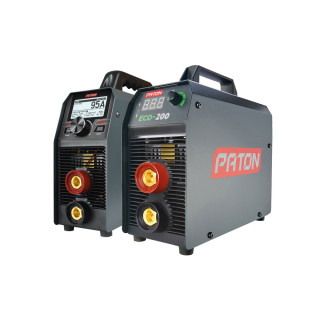
PATON ECO-250
PATON ECO-250 is a powerful MMA inverter for those who need a good current reserve and the ability to work with thicker workpieces. The model is suitable for garages, workshops, installation, and regular welding with stick electrodes. The machine is designed for tasks where a stable arc, confident ignition, and normal operation under load are important.
Advantages
The main advantage of the ECO-250 is high welding current for its category. The machine allows work with different electrode diameters and is suitable for more serious tasks than compact household models. Hot start, arc stabilization, and anti-stick functions help even a beginner work confidently.
Disadvantages
For small household tasks, the ECO-250 may be excessive in power. Also, when working at high current, it is important to consider the capacity of the mains and the quality of extension cables. If you only need to weld thin metal and perform occasional repair work, a compact model can be considered.
PATON ECO-160
PATON ECO-160 is a compact inverter for home use, country houses, garages, and simple installation work. It is suitable for those looking for a simple machine for occasional electrode welding without extra weight or complex settings. This is a practical option for beginners and users who value mobility and clear control.
Advantages
The ECO-160 is convenient due to its compactness, moderate energy consumption, and simple operation. The machine is easy to carry, store, and use for small repair tasks. It is suitable for working with common electrodes and helps achieve a stable weld with proper metal preparation.
Disadvantages
The limitation of the model is related to its smaller welding current reserve. For thick metal, long passes, and intensive work, it is better to choose a more powerful inverter. The ECO-160 is good for household tasks, but it is not designed for heavy production loads.
Popular models of semi-automatic welding machines
Semi-automatic welding machines are used for MIG/MAG welding, where filler is fed automatically. Such a machine is convenient for long welds, thin sheet metal, bodywork, equipment repair, and metal structure fabrication. A semi-automatic machine helps increase work speed and achieve a neat weld.
In the semi-automatic welding machines category, you can choose a model for a workshop, production, or universal use.
PATON StandardMIG-200
PATON StandardMIG-200 is a universal semi-automatic machine for MIG/MAG welding, which can also be used for other welding tasks depending on configuration and mode. The model is suitable for workshops, repairs, structure fabrication, and sheet metal work. It is a good option for those who want to move from MMA to more productive wire welding.
Advantages
StandardMIG-200 combines clear control, stable wire feeding, and good capabilities for working with different materials. The machine is convenient for regular tasks where speed, neatness, and repeatable results are important. It helps achieve a stable arc and reduce the amount of cleaning after welding.
Disadvantages
For intensive production and constant work at high currents, the capabilities of StandardMIG-200 may not be enough. If long welds on thick metal are planned, it is better to consider more powerful ProMIG models or machines with a larger load reserve.
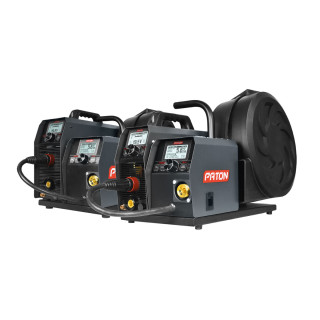
PATON ProMIG-250-15-2
PATON ProMIG-250-15-2 is a professional semi-automatic machine for tasks where productivity, stable feeding, and power reserve are important. The model is suitable for workshops, metal structure fabrication, and regular work with different metal thicknesses. The 15-2 index indicates a configuration with a feed mechanism for larger spools and a two-roller feed system.
Advantages
The machine has a good current reserve and is suitable for more intensive welding than household semi-automatic machines. It is convenient for working with steel, stainless steel, and other materials with the correct choice of gas and wire. Stable feeding helps achieve an even weld and confident penetration.
Disadvantages
For very intensive production, versions with a four-roller feed mechanism are worth considering. The machine is also larger and more advanced than compact models, so it may be too powerful for occasional household repairs.
PATON ProMIG-200-15-2
PATON ProMIG-200-15-2 is a semi-automatic machine for those who need a professional design, but without the maximum current reserve. The model is suitable for workshops, repairs, structure assembly, and regular MIG/MAG welding. It can be a good choice if versatility is needed, but there is no need to constantly work at 250 A and above.
Advantages
ProMIG-200-15-2 is convenient for stable work with wire, provides good arc control, and is suitable for different tasks. Compared to more powerful models, it can be more convenient where the balance of capabilities, weight, and energy consumption is important. The machine is well suited for regular welding in a workshop.
Disadvantages
The current reserve is lower than that of the ProMIG-250-15-2, so for thick parts and long passes, the higher model will be more suitable. Also, when working with aluminum or soft wire, it is necessary to carefully monitor the condition of the feed channel and pressure adjustment.
Popular models of TIG machines
TIG machines are chosen for precise and neat welding. This process is especially in demand when working with stainless steel, thin metal, pipes, decorative products, and parts where weld appearance is important. TIG provides high control over the weld pool, but requires more skill.
In the TIG welding section, the model should be selected by current, metal type, ignition modes, duty cycle, and additional functions.
PATON StandardTIG-250 WA
PATON StandardTIG-250 WA is a TIG machine for those who need high current and extended capabilities in argon arc welding. The model is suitable for professional work, workshops, and tasks where a stable arc, precise adjustment, and a neat weld are important.
Advantages
The main advantage of the model is its welding current reserve and convenience when working with demanding tasks. The machine helps control the weld pool, work with different metal thicknesses, and achieve a clean weld. With proper settings, it is suitable for precise welding and regular use.
Disadvantages
For simple household tasks, StandardTIG-250 WA may be excessive. TIG welding requires metal preparation, suitable gas, consumables, and skill. If fast welding of long seams is needed, a semi-automatic machine may be more practical.
PATON StandardTIG-200 WA
PATON StandardTIG-200 WA is a more compact option for TIG welding, suitable for workshops, repairs, work with thin metal, and neat joints. The model is convenient for those who need TIG without the excessive power of higher machines.
Advantages
StandardTIG-200 WA combines precision, a stable arc, and easy adjustment. The machine is suitable for stainless steel, thin parts, and tasks where a clean weld appearance is important. It can be convenient for users who value compactness and process control.
Disadvantages
The current reserve is lower than in the 250 WA version. For thick metal and long work at high modes, it is better to choose a more powerful model. It should also be considered that TIG welding is not always the fastest technology for serial fabrication of structures.
Popular models of combined welding machines
Combined machines are chosen when work in several processes is needed. One multiprocess machine can replace a separate MMA inverter, semi-automatic machine, and TIG source for many tasks. This is convenient for workshops, service, and users who work with different materials.
In the multiprocess welding machines category, it is worth paying attention to modes, feed mechanism, current range, and ease of switching settings.
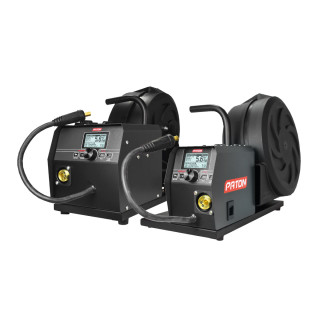
PATON MultiPRO-250-15-4
PATON MultiPRO-250-15-4 is a multiprocess machine for professional tasks. It is suitable for MIG/MAG, MMA, and TIG, so it covers a wide range of work in a workshop. The four-roller feed mechanism helps work with welding wire stably and increases feed reliability.
Advantages
The main advantage of the MultiPRO-250-15-4 is versatility. The machine is suitable for different processes and allows quick switching between tasks. Current reserve, powerful feeding, and professional design make it a good solution for regular work, repair, and production.
Disadvantages
For a user who only needs MMA welding or occasional household work, the MultiPRO-250-15-4 may be too functional and expensive. Also, due to its wide capabilities, the machine requires a more careful approach to settings.
PATON MultiPRO-200-15-4
PATON MultiPRO-200-15-4 is a universal machine for those who need multifunctionality but do not require the maximum power of the 250 version. It is suitable for workshops, repairs, MIG/MAG welding, electrode work, and TIG tasks within its range.
Advantages
MultiPRO-200-15-4 is convenient as an everyday machine. It combines versatility, stable feeding, and the ability to work with different processes. This is a good choice for users who want one machine for most tasks without moving to a more powerful model.
Disadvantages
In terms of current reserve, the model is below the MultiPRO-250-15-4. If it is necessary to often weld thick metal, perform long passes, and work under high load, the higher version will be more suitable. For simple tasks, the machine may be more functional than needed.
Which welding machine to choose for your tasks
If you need a simple machine for home, country house, and repair work, it is worth looking at the ECO-160. It is compact, clear, and suitable for basic MMA welding. If a larger current reserve and work with thicker parts are needed, it is better to choose the ECO-250.
For wire work, body repair, long welds, and metal structures, a semi-automatic machine should be chosen. StandardMIG-200 is suitable for workshops and universal tasks, ProMIG-200-15-2 is for regular work with a good reserve, and ProMIG-250-15-2 is for higher loads.
If neatness, precise pool control, and a clean weld are important, TIG machines should be considered. StandardTIG-200 WA is suitable for precise work and moderate current, while StandardTIG-250 WA should be chosen if a larger reserve and professional use are needed.
For maximum versatility, MultiPRO-200-15-4 and MultiPRO-250-15-4 are suitable. The first option is convenient as a multifunctional machine for a workshop, while the second is better for more intensive tasks and work with a power reserve.
Summary
The best PATON welding machines should be chosen not by one parameter, but by the combination of welding mode, welding current, mains voltage, productivity, and versatility. Good welding is achieved when the machine, electrode, welding wire, and settings match the specific task.