

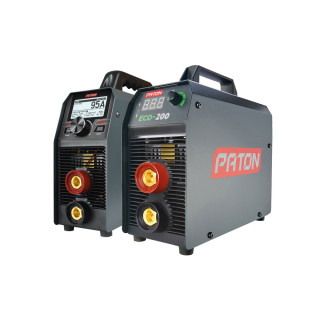
-320x320.jpg "MIG/MAG Welding Machines")
-320x320.jpg "TIG AC/DC Welding Machines")




-320x320.jpg "Electrodes for High-Alloy Steel")
-320x320.jpg "Surfacing Electrodes")
-320x320.jpg "Electrodes for Cast Iron")










-320x320.jpg "Welding Masks")





-320x320.jpg "Welding Machine Carts")











How is metal cut? Main types of metal cutting
Published:
22/07/2026
Different types of metal cutting vary in their operating principle, accuracy, speed, and edge quality. One method is suitable for rough profiling of thick metal stock, while another is used for precise processing of sheet metal or complex contours. Before choosing equipment, it is important to understand which metal cutting methods are available and how they differ.
Metal processing is used in construction, manufacturing, repair, and the production of structures, components, and blanks. The right method depends on the material thickness, alloy type, required accuracy, and any further processing. These factors affect both productivity and the quality of the finished product.
What Metal Cutting Methods Are Available?
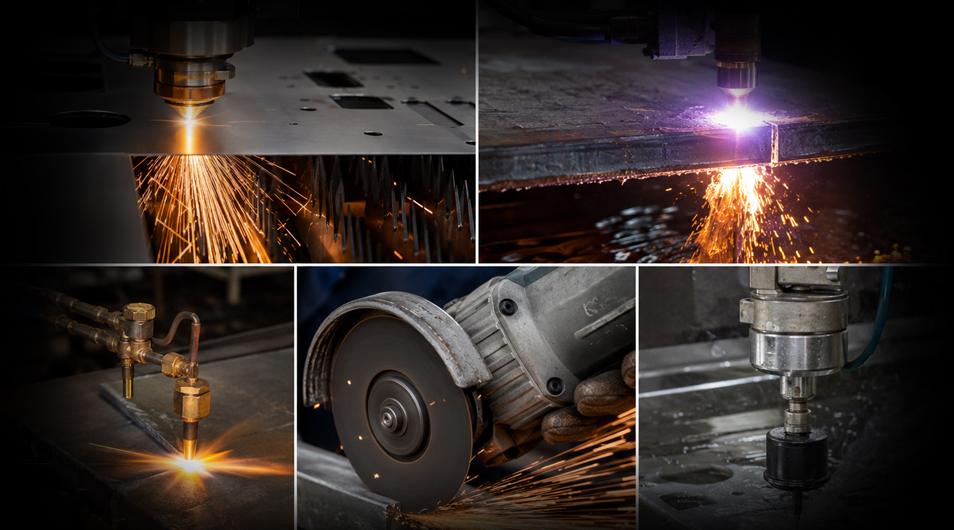
The main types of metal cutting can be divided into two broad groups: thermal and mechanical methods. Thermal processes use high temperatures to melt, burn, or remove material. Mechanical methods rely on physical force, pressure, friction, or abrasive action.
The most common methods include:
- oxy-fuel cutting for thick carbon steel and rough profiling;
- plasma cutting for fast separation of steel, stainless steel, aluminium, and other electrically conductive metals;
- laser cutting for accurate contours and clean edges in sheet metal;
- mechanical processing for blanks, profiles, pipes, and rolled products;
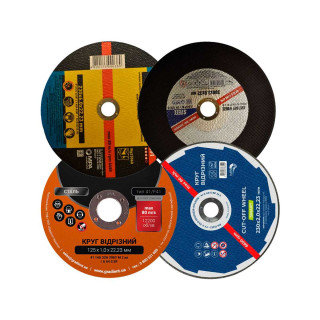
- abrasive cutting with a disc, wheel, or continuous blade.
Each option has limitations. Oxy-fuel equipment is unsuitable for many alloys, laser systems require significant investment, and mechanical methods may be less convenient when producing complex contours.
Thermal Metal Cutting Methods
Thermal metal cutting is based on the use of high temperatures. The material is heated, melted, oxidised, or blown out of the kerf. The main technologies in this group are oxy-fuel, plasma, and laser processing.
These methods are useful when a sheet, pipe, profile, or large workpiece must be divided quickly. They can handle different material thicknesses, but the result depends on the correct choice of power, gas, operating mode, and travel speed.
Oxy-Fuel Metal Cutting
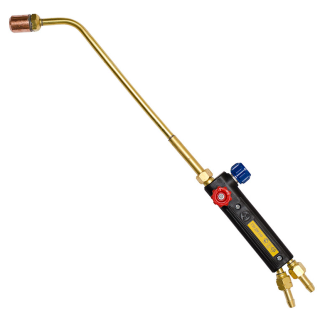
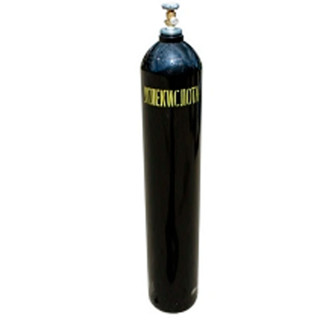
Oxy-fuel cutting works by heating steel with a flame and directing a stream of oxygen into the working area. The oxygen reacts with the heated metal, while the resulting molten oxides are blown out of the cut. This method is particularly suitable for thick carbon steel.
It is commonly used for demolition, rough profiling of steel stock, and the preparation of large components. The equipment is relatively simple and can be operated on construction sites and in outdoor working areas.
However, the finished edge often requires additional grinding or machining. Accuracy is generally lower than with plasma or laser technology. Oxy-fuel processing is also unsuitable for aluminium, stainless steel, and many non-ferrous metals because these materials do not react with oxygen in the same way as carbon steel.
Plasma Cutting
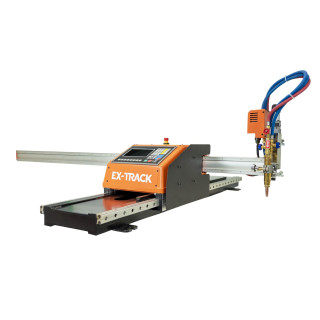
Plasma cutting uses a high-velocity stream of ionised gas. The plasma arc reaches a very high temperature, rapidly melts the material, and removes the molten metal from the kerf. This technology is suitable for steel, stainless steel, aluminium, copper, and other electrically conductive materials.
Plasma processing is valued for its speed, versatility, and ability to work with a broad range of thicknesses. It is suitable for workshops, production facilities, repair work, construction, and the preparation of components before welding.
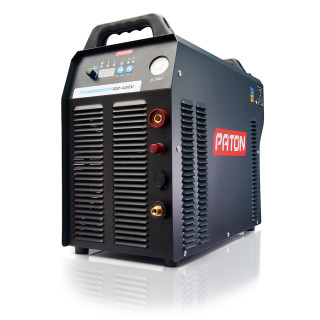
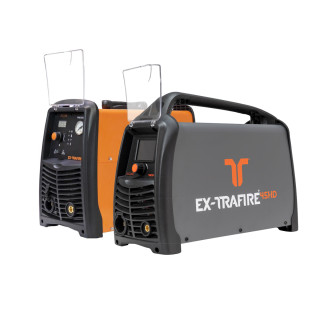
A suitable plasma cutter makes it possible to profile materials quickly and produce a neat edge without the need for a gas cylinder containing combustible fuel.
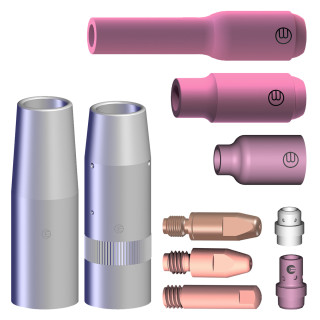
With the correct settings, plasma provides an even cut and reduces the amount of further edge preparation. The operator must consider cutting current, air pressure, travel speed, torch height, and the condition of consumable parts. Incorrect parameters may cause dross, excessive bevel, an uneven kerf, or overheating.
Laser Cutting
Laser cutting uses a focused high-power beam to heat and remove material from a narrow working area. Because the beam is highly concentrated, the process can provide accurate contours while limiting the heat transferred to the surrounding metal.
This technology is particularly effective for sheet metal. It is used for complex parts, decorative elements, enclosures, panels, and repeated production blanks. A programmed laser system offers high repeatability and can create detailed shapes that would be difficult to produce with manual equipment.
The main advantages are precision, a narrow kerf, and good edge quality. However, laser equipment is expensive and requires accurate setup, servicing, and process control. For very thick materials, it may not always be the most economical option when compared with plasma or oxy-fuel methods.
Mechanical Metal Cutting Methods
Mechanical metal cutting does not rely on melting the workpiece. The material is divided using a saw, blade, shear, milling cutter, guillotine, disc, or abrasive tool. This approach is useful when excessive heating must be avoided or when the original material structure needs to be preserved.
Common mechanical techniques include shearing, band sawing, circular sawing, milling, punching, abrasive disc work, and machine-based profiling. They are regularly used for pipes, profiles, bars, sheets, rods, and smaller blanks.
One important advantage is the absence of a heat-affected zone. This can simplify subsequent welding or machining because the area around the edge has not been exposed to intense thermal influence.
Mechanical processing also has limitations. Production speed may be lower, particularly on thick or hard alloys, and cutting tools gradually wear during use. The workpiece must be secured correctly to prevent movement, burrs, an angled edge, or damage to the material.
How to Choose the Right Metal Cutting Method
The best option depends on the material, thickness, required accuracy, working environment, and expected productivity. If thick carbon steel needs to be separated quickly on site, oxy-fuel equipment may be suitable. When versatility and high speed are important, plasma is often the more practical solution. Laser systems are better suited to thin sheet, detailed contours, and repeat production.
Further processing should also be considered. If the edge will later be welded, it should be reasonably straight and free from heavy scale, severe overheating, or large defects. Poor edge quality increases preparation time and may affect joint fit-up.
For serial production, repeatability, speed, automation, and operating cost are particularly important. In repair and installation work, portability and ease of setup may be more valuable than maximum precision.
Before selecting a method, consider:
- the metal type and material thickness;
- the required accuracy and edge quality;
- the volume of work and desired processing speed;
- the need for subsequent welding, grinding, or machining;
- the cost of equipment, consumables, and maintenance.
When work involves several electrically conductive materials and different thicknesses, plasma is often a versatile choice. It combines speed, flexibility, and practical equipment costs, making it suitable for workshops, installation work, repairs, and production.
Summary
The main metal cutting methods differ in how they affect the material, the edge quality they produce, their working speed, and their overall cost. Choosing the right option requires consideration of the material type, workpiece thickness, accuracy requirements, and equipment operating conditions.
Oxy-fuel equipment is suitable for rough processing of thick carbon steel, plasma is a flexible option for different conductive metals, and laser technology is used for accurate contours and clean edges. The correct method helps produce a suitable blank, reduce defects, and minimise the amount of further processing.